


Startups are filled with energy and radiate positive vibes that make you feel uplifted and believe that everything is possible. It’s easy to see why the people behind them are true believers, driven by ideas that really could change the world.
However, enthusiasm alone does not do the trick of making complex and groundbreaking ideas manifest. To bring a beautiful unicorn from a dreamland, startup founders should attract enough financial resources, stay within budget/time frames, and present a product of the highest quality. Although each of these vital survival points can seem difficult to achieve, there is a way to make it less stressful and more gradual, startup minimum viable product or MVP.
In this article, we will dive into the concept and tell you:
- What is MVP,
- The major benefits MVP carries for emerging companies,
- Tips on how to build an MVP.
What is a startup MVP?
Basically, minimum viable products (MVPs) are the product prototypes of a new age. Like the old-fashioned prototypes, MVPs show the feasibility of the product's idea and convince investors that they will benefit from putting their money into it.
With all the technologies around, the concept of a product prototype has shifted a lot and brought the term MVP into play. Now, it's more related to the software products. An MVP also refers to the software development paradigm that is used to build mobile and web applications or other solutions with a minimal set of features and limited resources. They are also used to present the product to investors quickly, and then to continue enriching the existing product with additional functionality.
Ultimately, the goal of an MVP is to prove retention by solving one job for one customer group effectively.
Note: To help shape these early versions, an MVP tree is used to methodically break down a mission into smaller components to formulate MVP candidates.
Benefits of a minimum viable product
The MVP development approach has found more popularity among early-stage companies than any other type of business. This popularity comes from the unique nature of MVPs and the plethora of benefits this type of project delivery brings to emerging companies.
- Fast project launch
As MVP includes only the basic features of your "early-stage" application, it won't take long to deliver it. It's ideal to test an idea with limited resources. Also, quick time to market allows you to validate your ideas and get your first income at an early stage of your startup project development. The average MVP development project takes only 3 to 6 months. In addition, MVP release is an essential milestone that can mark the beginning of the next investment round, making your product more mature and attractive to investors.
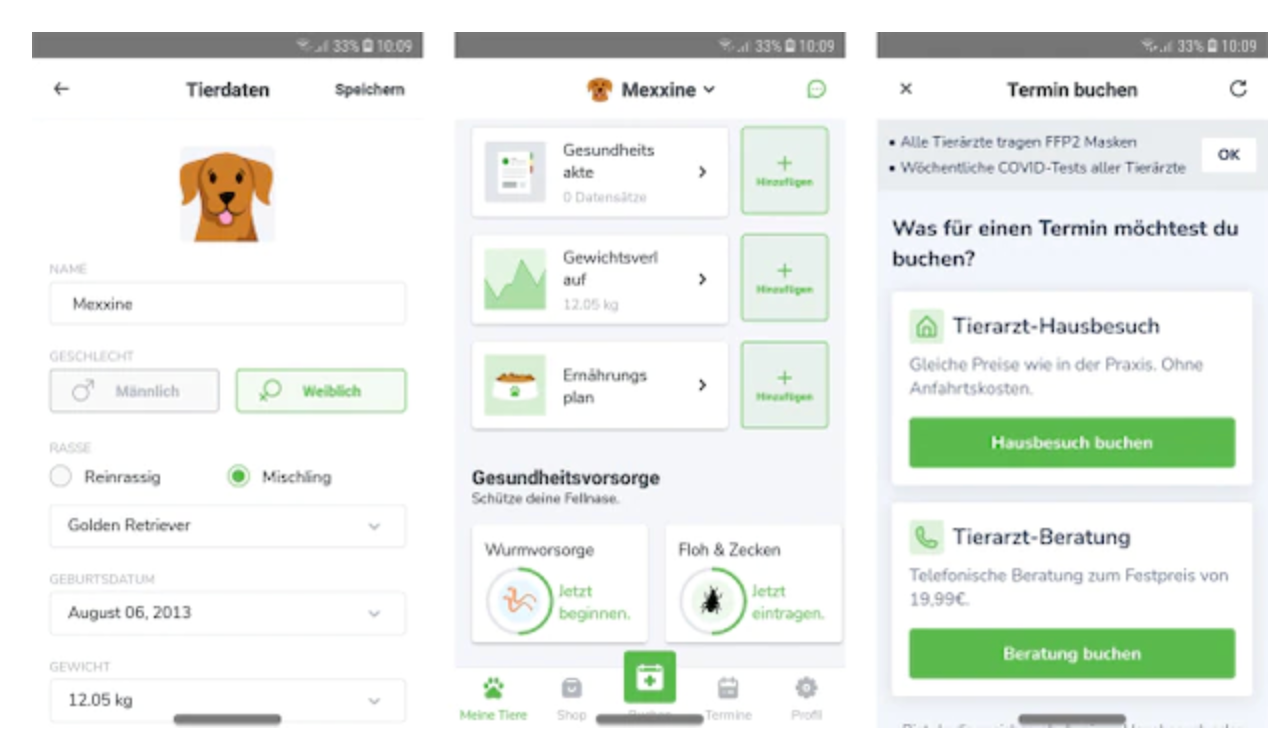
In this case, Felmo is a great instance of a startup project that flew and attracted around $10 million during the second investment round, after their MVP release. Lars Giere, the startup's founder, had the idea to bring vet services online or right to clients' homes. To make the idea work, he needed to build a mobile application and turned to a startup software development company. Having professional application developers and the best cross-platform application development technologies, Lars & Felmo's team got a complete and functional MVP in 6 months, ensuring the quality of their mobile application.
You can read more about this case study here.
- Lower cost
You don't need an army of developers or a massive budget to build a successful MVP. A compact team of seasoned experts is often enough to create a performant product that lets you "validate" your startup idea in action, even with limited resources.
The idea behind an MVP is to deliver the maximum amount of validated learning about customers with the least effort and cost. Instead of investing heavily upfront, you launch a basic yet functional version, focused on solving one core problem.
Another advantage is that you're building for an existing market, meaning you can tailor your solution based on real testimonials instead of assumptions. This approach also helps you avoid high costs later on: by adapting new features and design to actual user needs over time, you reduce the need for major rebuilds and rework after release.
- Early incomes
If you need a web or mobile application to get to customers online, an MVP can help you connect with your product and start bringing you an income from the start. To be able to make an order for your service, customers won't need a special UI design and advanced functions. However, it is important to provide your customers with an excellent user experience. That’s why it’s smart to start enhancing your application to win users over with outstanding UI/UX and strong performance.
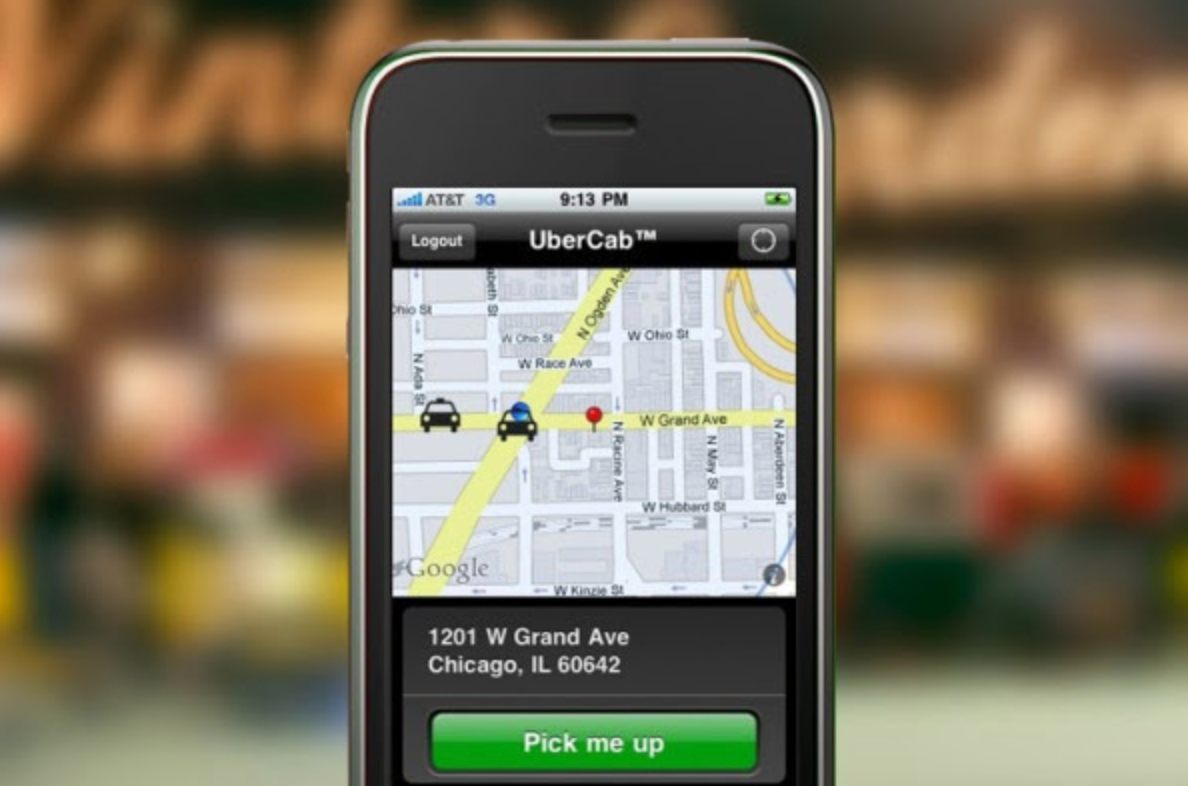
For example, the Uber mobile application was an MVP at its early stages. It had a plain design and the only function was to connect a taxi driver with a client and display their location. Being released fast, the Uber MVP brought the startup its first income and customer base earlier.
- Reduce risks
Going through the MVP journey helps you avoid difficulties down the road. It clarifies your product vision and helps streamline implementation by incorporating customer feedback and testing real workflows. With that, you won't need to feel around or exercise a hit-and-miss method. In this way, your product-building workflow becomes more predictable, so you can also improve your budgeting and time management.
- Reassure investors
MVP is a strong argument during your project presentation to investors. Vivid slideshows and pitching are all important, but if you have something tangible to support your words with, it makes your speech much more persuasive. You can present your MVP even with the initial demand analysis that will prove the feasibility of your project's idea in the long term.
- Get the early feedback
Founders and product leaders should refine their visions and audiences based on customer feedback to build great products. To make this workflow more effective, it's smart to engage potential users (aka likely-to-be early customers) before the MVP is even live.
Building a waitlist of target users helps in obtaining early product reviews effectively. Also, partners and community influencers can help in building a targeted waitlist of users. These early sign-ups become your early adopters/beta users, providing feedback that helps shape the product and builds momentum for rollout.
Thus, MVP allows collecting feedback at the early stages of the application building stage. It enables you to adjust the elements, while it functions rather than remaking the code of a fully-fledged solution. Rebuilding a product's core elements is extremely daunting and requires additional resources. With MVP and the proper attention to your customers' feedback, you can save money and make growing your business a smoother, more enjoyable journey.
Tips on how to build an MVP effectively
After igniting your urge to build an MVP for your early-stage company, we'd like to give you some tips on how to organize this workflow. They will help you to make the maximum profit from your MVP and avoid unnecessary hustle.
Get clear on the Why, What, and Who before you build
Before jumping into product engineering, it's crucial to understand the core purpose of your MVP: why you're building it, what exactly you're offering, and who it's meant for. Having this clarity early on helps ensure you’re solving a real problem for a real group of people, not building new features just for the sake of it.
At this stage, defining customer archetypes helps narrow the product scope and aligns it with specific user needs. The initial MVP should cater to a narrow audience to ensure better engagement and feedback. Narrowing the target audience helps focus the product and makes competition easier. Iterating on user feedback can refine the product and cater to a broader audience over time.
Note: Many startups struggle not because their ideas are bad, but because they try to do too much, too soon. Also, they often fail because they do not build a simple solution to a common problem. Keeping it simple and focused increases your chances of hitting the right mark from the beginning.
Build a feedback loop from day one
This ties closely to the previous advice. However, after answering the key questions and recognizing the value of feedback from beta users, it’s crucial to build opportunities for co-creating those very insights. For this reason, you need a reliable feedback loop.
A feedback loop is your system for collecting, analyzing, and acting on user feedback – again and again. Without it, you risk building blindly, missing out on valuable user insights that could define your product’s success.
To build a strong feedback loop:
- Make it easy for users to share feedback (in-app surveys, emails, interviews).
- Analyze patterns in feedback instead of acting on every single comment.
- Prioritize changes that align with your product’s main goals.
For inspiration: Companies like Airbnb and Slack started small but scaled fast because they built tight feedback loops into their early MVPs. Therefore, it’s not just about hearing your users but about evolving with them.

Plan your MVP creation
For a successful release, it is very important to know the exact release date. Detailed planning can give you an accurate date so you can build your promotion campaign and jumpstart your project in the best way. Also, having a well-defined mission statement helps avoid losing focus during product engineering. After the release, you'll need to build a thorough timeline for the expansion of your app's functionality.
A thorough project delivery plan with a timeline and milestones will feel like a well-mapped gameplay for your new venture. If your plan is built on solid facts, you’ll navigate the "valley of failed start-up ideas" safely, avoiding all the pitfalls.
For example, look at Airbnb. Their mission early on was simple: "To help people belong anywhere." They stuck to this idea throughout their MVP creation, which was essentially just a website where people could list their spare rooms. They didn’t get distracted by fancy functions but focused on solving the problem of finding affordable accommodations, something they later expanded on based on user feedback.
What's more, once your MVP is released, the work doesn’t stop there. It’s important to have a clear plan for what happens after launch, especially when it comes to scaling and adding new features. That way, you can focus on what users actually need based on real feedback, instead of building features no one asked for.
Choose the right tech stack
Another crucial aspect of your MVP creation is the technologies and programming languages. Depending on the specifications of your solution, you can choose from dozens of trusted frameworks, libraries, databases, and 3d parties. For instance, you can leverage React or Angular for web app development. Meanwhile, React Native or Flutter will be a great option if you'd like to develop a cross-platform mobile application to work on Android and iOS as well.
Again, your project requirements and budget frames define the tech stack you choose. Speaking of project requirements, you should keep in mind the early post-MVP period of your solution engineering. It is crucial for you to leverage the technologies that will provide you with seamless scaling, 3d party tools integrations, custom designs, and new functionalities as your company expands into a stable enterprise.
Also, keep in mind an MVP isn’t your final "boss battle" – it’s just level one. That's why developing for multiple platforms too early can stretch your resources and hurt product quality.
Test early and often
Launching your MVP isn't the end of the road – it's just the start of real learning. Testing with real users as early as possible gives you crucial insights into how your product works (or doesn’t) in the real world.
It’s better to discover early that users don’t understand a functionality than to spend months perfecting something nobody needs.
Here’s how you can test efficiently:
- Alpha testing
Start by validating within your own circle (your team, advisors, or a select group of internal stakeholders). Alpha testing is critical for ironing out bugs in basic functionality before exposing the product to outside eyes. This stage often uncovers glaring issues that the development team might overlook.
- Beta testing
Expand your testing to a select group of early adopters outside your organization. These are users who are interested in trying out new products and can provide valuable feedback on user experience, usability, and functionality. Beta testing helps identify issues that internal testers might have missed and gives you a better understanding of how the product works in the real world.
- Soft launch (or limited audience release)
Before jumping into a full public launch, try releasing your MVP to a smaller, targeted group of users first. This kind of soft launch lets you test your ideas, see how people actually use the product, and spot any issues early on. It’s a smart way to reduce risk and avoid bigger problems down the line.
Pro Tip: Don’t wait for perfection – get the product in front of real users as soon as possible, even if it’s in a rough state. The goal is to learn as much as you can so you can improve and iterate quickly. "Fail fast" is a popular mantra for startups because it emphasizes the importance of learning from mistakes early and moving on to more polished versions.
Hire a startup software development company
Teaming up with a development company that specializes in startups can make a big difference, especially when you’re just getting off the ground. These teams get what early-stage ventures need and often offer flexible, growth-friendly support to help things run more smoothly. Here’s how the right experts can really make an impact:
- Faster engineering and time savings
Skip the lengthy process of hiring individual developers and team leads. An experienced software development company can rapidly assemble the right team for you and help you move forward without delays.
- Support at every step
From early planning to building your MVP and beyond, these teams walk you through the whole process. You get expert help at each stage, so nothing falls through the cracks.
- Stay focused on what matters
Working with pros means you don’t have to worry about every little detail. They handle things like picking the right tech, setting timelines, and managing development, so you can stay focused on the big picture.
- More time to grow
With the tech stuff off your plate, you can focus on what really matters – like growing your brand, shaping your strategy, and taking your business to the next level.
{{cta="/service-blocks"}}
In conclusion
Here you go! With a clear understanding of MVP benefits and practical tips to guide your MVP journey, you’re all set to kick off your own project.
If you need some additional guidance on the process or wish to discuss your case with our startup development experts, book a call with us. Akveo's startup software development company provides a full spectrum of services, including web/mobile applications design, startup consulting, QA, cloud, post-release support, design support, and more. We create custom MVPs and fully-fledged applications from scratch for different industries and have a number of great success stories with our partners.
Meet our startup development expert, Eugene. He helps startups make product discovery, choose the right tech stack, and build a development team that will craft your product on time and within your budget.