






Access the expertise required to update, migrate, and optimize the organization's applications.
Breathe new life into outdated software. Transform a cumbersome monolithic application into a high-performing system. Improve software quality and maintainability with the core business logic preserved.
What you get:
Align heavy corporate software with modern business processes. Overhaul extensive legacy systems to ensure seamless integrations, unified data management, and an intuitive user experience for internal teams and external clients.
What you get:
Take advantage of the full power of the cloud. Upgrade applications to use cloud native solutions, enabling dynamic scaling, automated deployments, and resilient performance across diverse digital environments.
What you get:
Move digital assets securely and efficiently. Execute a seamless application migration from on-premises servers to modern cloud platforms like Google Cloud or AWS.
What you get:
Optimize the software from the inside out. Restructure existing code to resolve technical bottlenecks and improve performance without altering the external behavior or existing functionality of the platform.
What you get:
Future-proof the technological foundation. Transition to microservices and serverless architectures to ensure individual application components can be updated, scaled, and maintained independently.
What you get:
Discover how organizations leverage advanced technologies to scale faster and serve millions of users globally.
1st Place at German Innovation Award 2021
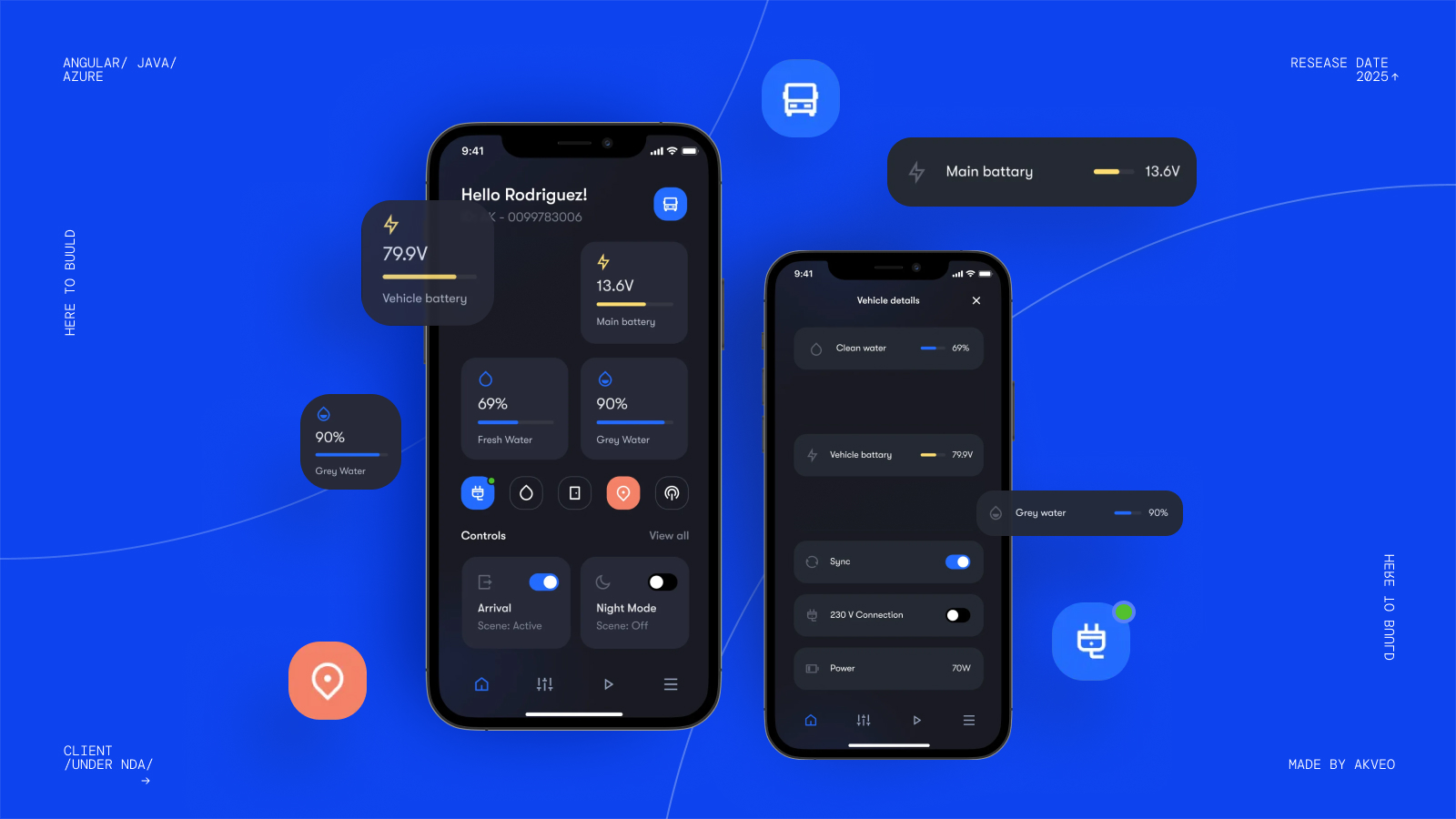
Akveo digitized the customer experience by connecting physical vehicles to modern applications. By developing a secure Bluetooth-connected mobile app to control lighting, climate, and satellite systems remotely, we helped the customer provide a fully customizable digital ecosystem for mobile home owners.

Reduced time-to-market fourfold and cut application maintenance by 2.5x
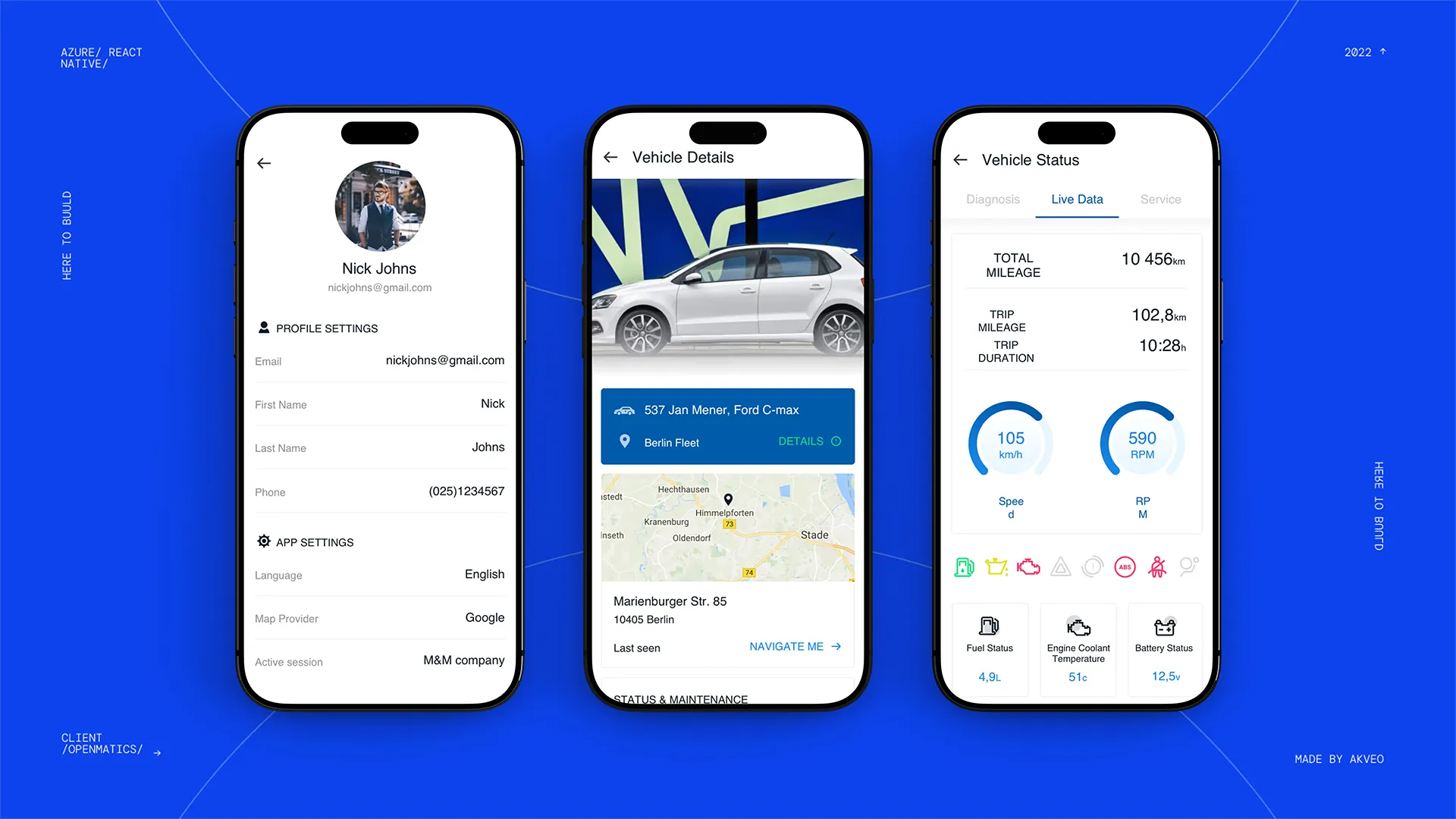
We modernized fleet management and driver assistance through cloud computing and advanced analytics. Transitioning complex tracking systems into a unified cross-platform mobile application ensured transparent work logging, real-time crash reporting, and seamless localization.
MVP launched in exactly 2 months
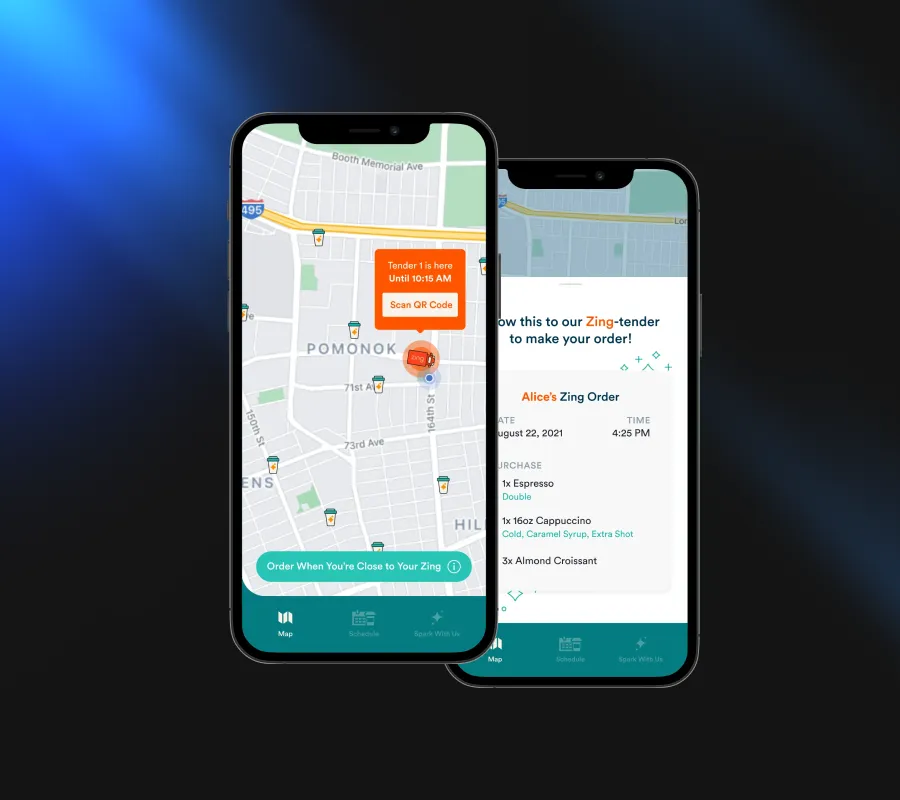
Our customer met the evolving business needs of suburban living with data-driven decisions and high availability. Akveo implemented a cloud-based architecture via AWS Amplify to allow the rapid launch of a robust fleet tracking and coffee ordering app.
Get more than just a technical upgrade. Partner with modernization experts focused on measurable operational impact.

Transition to flexible cloud resources. Pay only for the exact computing power used to maximize infrastructure investments and generate a higher ROI.

Upgrade the underlying code and embrace a cloud-first model. Guarantee high availability and peak performance to handle massive user loads effortlessly.

Protect critical applications and sensitive data. Integrate zero-trust protocols to ensure the architecture meets strict regulatory standards across all environments.

Launch new features and adapt to market shifts rapidly. Pave the way for integrating advanced technologies like AI automation and machine learning.

Transform legacy interfaces into intuitive digital environments. Deliver high-speed experiences that drive immediate user adoption and long-term loyalty.

Shift to microservices and automated deployment pipelines. Accelerate release cycles and empower internal teams to maintain the platform with maximum efficiency.




Transform legacy systems into compliant solutions tailored to sector demands.
Transition outdated healthcare systems into HIPAA-compliant cloud platforms to accelerate patient care and protect sensitive medical data.
Replace rigid legacy software with automated claims processing platforms to accelerate policy management and improve risk assessment.
Upgrade backend infrastructure to process massive device data streams instantly, delivering real-time control and scalable predictive maintenance.
Overhaul monolithic financial applications into secure cloud architectures that process complex transactions with absolute reliability.
Refactor outdated telematics platforms into scalable, connected ecosystems that drive fleet efficiency and deliver real-time smart diagnostics.
Transform heavy legacy ERPs into agile digital interfaces that maximize factory uptime and provide transparent production data across the supply chain.
Migrate on-premises project management tools to flexible cloud platforms, unifying site tracking and resource allocation for faster build cycles.
Modernize rigid learning management systems into interactive and highly scalable cloud environments that boost student engagement and ensure universal access.
Technology selected to maximize performance, scalability, and long-term maintainability.


Collaborate in a way that fits the organization's modernization goals and internal team structure.
Get a full modernization team: cloud architects, backend engineers, DevOps specialists, and QA engineers. Ideal for long-term legacy transformation and enterprise platform evolution.
Best for: Enterprise platforms, long-term modernization roadmaps.
Have a specific migration or modernization scope delivered from start to finish. The team handles architecture, execution, and handoff.
Best for: Specific migrations, cloud lift-and-shift projects.
Need extra cloud or microservices expertise? Add senior engineers to an existing team to accelerate the modernization roadmap.
Best for: Teams needing cloud or microservices expertise.
70% of our partners continue working with us for more than 2 years.






Application modernization is the process of updating older software for newer computing approaches, including newer languages, frameworks, and infrastructure platforms. This practice resolves technical debt, improves software quality, and aligns legacy systems with current business needs.
When executing a cloud migration, organizations choose from seven standard strategies (the 7 Rs): Retain, Retire, Rehost (lift and shift), Relocate, Repurchase, Replatform, and Refactor/re-architect. Each strategy represents a different level of transformation, from keeping the application as-is to completely overhauling the architecture for a cloud-native environment.
Application modernization strategies vary based on the desired outcome: Application refactoring (restructuring underlying code to improve performance), UI/UX modernization (updating the user interface of a legacy app), Architecture modernization (breaking a monolithic application into microservices), and Cloud application modernization (moving on-premises infrastructure to AWS or Google Cloud).
A successful application modernization process generally follows four distinct stages: Assessment (evaluating legacy systems and identifying technical debt), Planning (selecting the appropriate strategy and mapping the cloud architecture), Execution (engineering the changes, including coding and data migration), and Optimization (monitoring the modernized application and refining performance).
Modernization projects fall into three categories: Infrastructure modernization (moving from on-premises servers to cloud computing solutions), Architecture modernization (redesigning the structural foundation by moving from monolithic to microservices-based approach), and Source code modernization (updating or rewriting the application's underlying code to resolve technical debt).