



Companies are in a race to adopt smarter, faster, and more secure systems to remain competitive in a rapidly evolving landscape. Keeping up with the emerging trends is crucial for staying ahead of the competition.
Let's explore the top trends in business process automation for 2026, offering a glimpse into the business automation technologies and approaches that are transforming how companies operate.
But before we proceed to our key topic, it will be helpful to take a look at what is happening in this sphere right now.
What is the demand for business process automation?
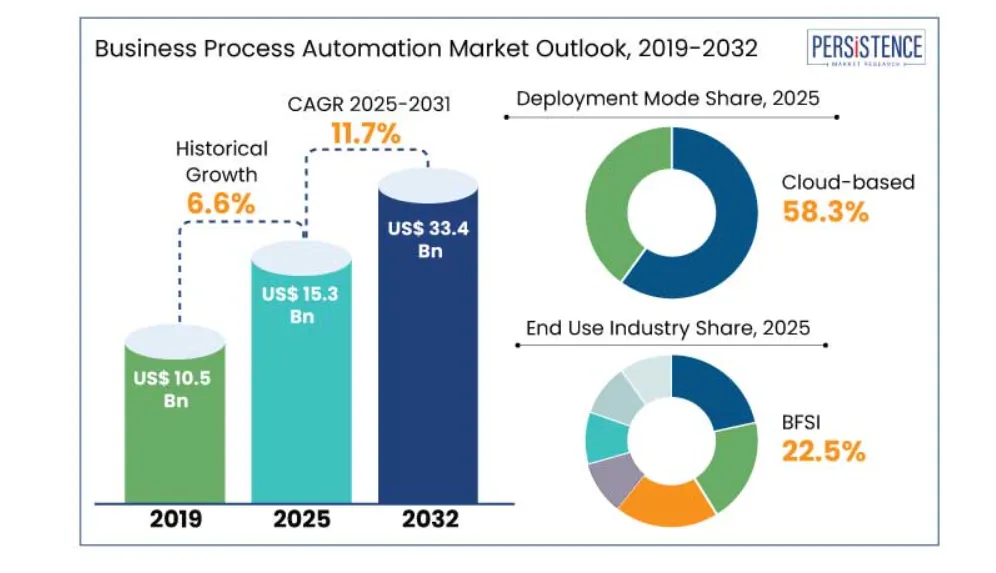
The global market of business process automation is expected to hit a volume of $15.3 billion in 2025. By 2032, the market size is projected to achieve a level of around $33.4 billion by 2032. This means that a CAGR over the forecast period will be 11.7%.
What factors are driving this demand?
- Increased efficiency and cost savings. Automation helps businesses reduce manual effort, minimize errors, and speed up operations. All this leads to significant cost savings. And of course, that is exactly what every company is striving for.
- Growing digital transformation. Businesses are adopting automation to stay competitive in an increasingly digital market environment.
- Tech advancements. Achievements in the development of different technologies like AI and ML enable the introduction of smarter, self-learning automation tools.
- Demand for enhanced customer experience. Today, consumers are accustomed to high-quality services. And automated workflows can help to provide them. It is possible thanks to the reduction of response times and service delays, as well as to the personalization of customer interactions.
- Scalability and flexibility. Cloud-based automation tools make it easier for businesses of all sizes to implement and scale automation.
Are there any factors that restrain automation?
Despite the fact that automation itself is viewed as a positive trend, businesses may find themselves not fully ready for it. There are still some barriers and challenges that restrain the adoption and effectiveness of automation.
For example, the cost of implementation, software, and infrastructure can become a serious barrier for small and medium-sized companies.
At the same time, even large organizations may hesitate to invest in automation due to concerns about the time required to see measurable benefits and uncertain ROI.
Another challenge is the fact that many businesses still rely on their legacy IT infrastructure, which is difficult to integrate with advanced automation tools. The modernization of old systems can be time-consuming and costly.
Don't forget as well that the implementation and maintenance of automation tools need certain skills and knowledge, which many businesses might lack. In this case, companies need to invest in upskilling or hiring specialized talent.
Moreover, some employees may be afraid of losing their jobs due to automation. This results in their resistance to using new tools and adapting to new automated processes. But to ensure mass adoption of automation, such challenges should be smartly addressed.
Key trends in business process automation
Business process automation includes using technology that streamlines and automates repetitive tasks. This helps businesses to operate more efficiently while minimizing errors and freeing up employees time to focus on higher-value work.
As automation becomes increasingly central to modern business strategies, staying ahead means understanding the trends driving its evolution.
What are the key BPA trends shaping 2026 that organizations need to consider to remain competitive and future-ready?
Trend 1. Intelligent automation, robotic process automation, and BPM
Artificial intelligence (AI) has been a buzzword capturing headlines worldwide for several years – and for good reason. Its impact on businesses is significant:
- By 2030, AI could contribute $15.7 trillion to the global economy.
- 94% of business leaders say AI is crucial to succeed.
- 79% of companies have deployed three or more AI solutions in the last year.
- 65% of employees report that automation reduces their stress, allowing them to focus on meaningful work.
Meanwhile, like any technology, AI continues to evolve, pushing the boundaries of what's possible. Today, staying ahead of the curve means going beyond AI alone.
Companies are increasingly turning to intelligent automation (IA) – a holistic approach that integrates AI as a key component but also incorporates other advanced technologies like robotic process automation (RPA) and business process management (BPM).
By combining AI, RPA, and BPM, intelligent automation delivers comprehensive solutions where each technology addresses a specific automation challenge:
- AI enhances decision-making by analyzing data, predicting outcomes, and enabling machines to learn and adapt.
- Robotic process automation (RPA) automates repetitive and rule-based tasks, such as data entry, invoice processing, or generating reports, freeing up employees to focus on higher-value work.
- BPM ensures that workflows are efficient, optimized, and scalable by managing, automating, and monitoring processes across departments.
The application of intelligent automation is becoming increasingly widespread across various industries.
Let us name a few.
- In healthcare, IA can automate tasks like patient data entry, enhance diagnosis with AI, and streamline hospital workflows, from appointment scheduling to billing.
- In banking, IA is used to automate such business operations as compliance checks, detect fraud with AI, and process loans and claims through business process automation.
- Retailers leverage IA to personalize customer experiences and optimize supply chains using BPM and AI-driven insights.
Trend 2. Low-code/no-code platforms: democratizing automation
Businesses are under constant pressure to deliver solutions faster while maintaining high-quality standards. Business process automation has emerged as a game-changing technology, enabling organizations to automate processes and build applications with minimal coding knowledge.
With their drag-and-drop interfaces and pre-built templates, low-code platforms make development more accessible and democratized.
Non-technical users, such as business analysts and operations teams, can now participate in the development process without needing deep technical expertise, significantly accelerating project timelines.
In fact, this approach to development is reported to be 40–60% faster than traditional coding. As such, low-code has been a major trend for several years now, bridging the gap between IT and business teams while streamlining the development of.
Here are a few cases where it's reasonable to consider this type of business process automation.
Limited IT resources
For companies with small IT teams or a backlog of development projects, low-code empowers business users to create solutions, reducing the strain on technical resources.
Dynamic business needs
When processes need frequent updates to respond to market changes, low-code platforms allow quick adjustments without requiring extensive re-coding.
Process-specific automation
For automating specific workflows, such as employee onboarding or approval systems, this approach to development enables quick, tailored solutions without building from scratch.
Cross-department collaboration
Low-code fosters collaboration between IT and non-technical teams, ensuring solutions are both functional and aligned with business needs.
Tight deadlines
When time-to-market is critical, such platforms allow faster prototyping and deployment compared to traditional development.
{{form}}
Trend 3. Hyper-automation: total process overhaul
Hyper-automation combines a range of advanced business process technologies, including robotic process automation, AI, ML, process mining, and others. It helps companies automate not just isolated tasks but entire firm operation. Also, it gives the opportunity to seamlessly collaborate, and drive greater efficiency across the business. For example, if a company relies on customer service chatbots, AI can analyze interactions and identify patterns that suggest opportunities for process improvement. These insights can then be used to adjust workflows, and AI can even predict the potential impact of these changes on customer satisfaction, response times, and overall service costs.
Additionally, platforms such as Retool, UI Bakery, Airtable, and others simplify automation, enabling non-technical users to implement changes and contribute to process optimization. At the same time, process mining tools help uncover hidden inefficiencies.
Considering its ability to integrate multiple technologies, hyper-automation is particularly valuable for automating complex, cross-departmental workflows and high-volume, repetitive tasks like data entry, invoicing, and customer service.
This approach is especially practical for businesses that rely on real-time decision-making or those experiencing rapid growth. It can help companies to scale without proportionally increasing their workforce.
Where is hyper-automation particularly useful?
Healthcare
In this domain, business process automation tools are used to streamline patient scheduling, medical billing, insurance claims, etc. AI is often used to support diagnostics, while RPA tools are intended to handle everything connected to administrative tasks.
Financial services
New technologies play an important role in this industry. For example, the automation of such business processes as compliance reporting, loan management, and fraud detection is typically powered by AI and machine learning, as well as RPA.
The latest automation trends also include the introduction of virtual assistants that can make the interaction between financial organizations and their customers much more efficient.
Retail
Digital transformation helps to streamline complex business processes in inventory management, enhance customer service with natural language processing, and power supply chain optimization with AI and business process management.
Manufacturing
In this industry, automated systems are mainly introduced to optimize existing processes on assembly lines, boost productivity, address predicting maintenance needs with AI, and improve quality control.

Trend 4. Smart data integration and security
According to Forbes, while AI adoption is on the rise, many organizations are not fully prepared to manage its use effectively. This applies to data security as well, among other things. With the rapid growth of AI, intelligent automation, and hyper-automation, the need for seamless and secure data integration has become more critical than ever.
These business process automation technologies depend on large volumes of data, making efficient integration and security essential for business success and protecting sensitive information.
What's more, the costs associated with data breaches are rising. Thus, the global average cost of a data breach reached $4.88 million in 2024, a 10% increase from the previous year, according to IBM.
In contrast, organizations that used secure AI and automation for prevention saved an average of $2.22 million compared to those that didn't. With the increased use of these systems, the risks to data security also grow. The more sensitive data is collected and processed, the higher the chances of breaches and cyberattacks. Since these technologies are interconnected, even a small vulnerability can lead to significant security threats.
Considering this, as businesses rely more on AI-powered technologies, smart data integration becomes very important. It involves connecting data across departments – such as sales, customer service, and inventory management – into a unified system. AI-driven systems can improve predictions and generate accurate insights without violating data.
For IA and hyperautomation, seamless data flow is crucial for automating complex business operations, such as supply chain management or customer support.
Trend 5. Human & Automation collaboration
This is likely to be one of the most significant business process automation trends in the coming years. As automation evolves rapidly, the key question is whether humans and machines can be “integrated” in a truly intelligent way. “Collaboration” between humans and automation solutions is most effective when it blends human judgment and creativity with the speed and accuracy of machines.
For example, AI and machine learning assist doctors by analyzing medical images or providing insights, but human expertise remains essential for diagnosing and interacting with patients.
In manufacturing, cobots (collaborative robots) work alongside human workers, handling heavy lifting and repetitive tasks, while humans focus on precision and quality control.
In customer service, AI-powered chatbots handle routine queries and transactions, while human agents step in for complex problems that require a personal touch. Low-code applications can automate scheduling, reporting and help manage customer information. This ultimately improves both customer relations and internal workflows.
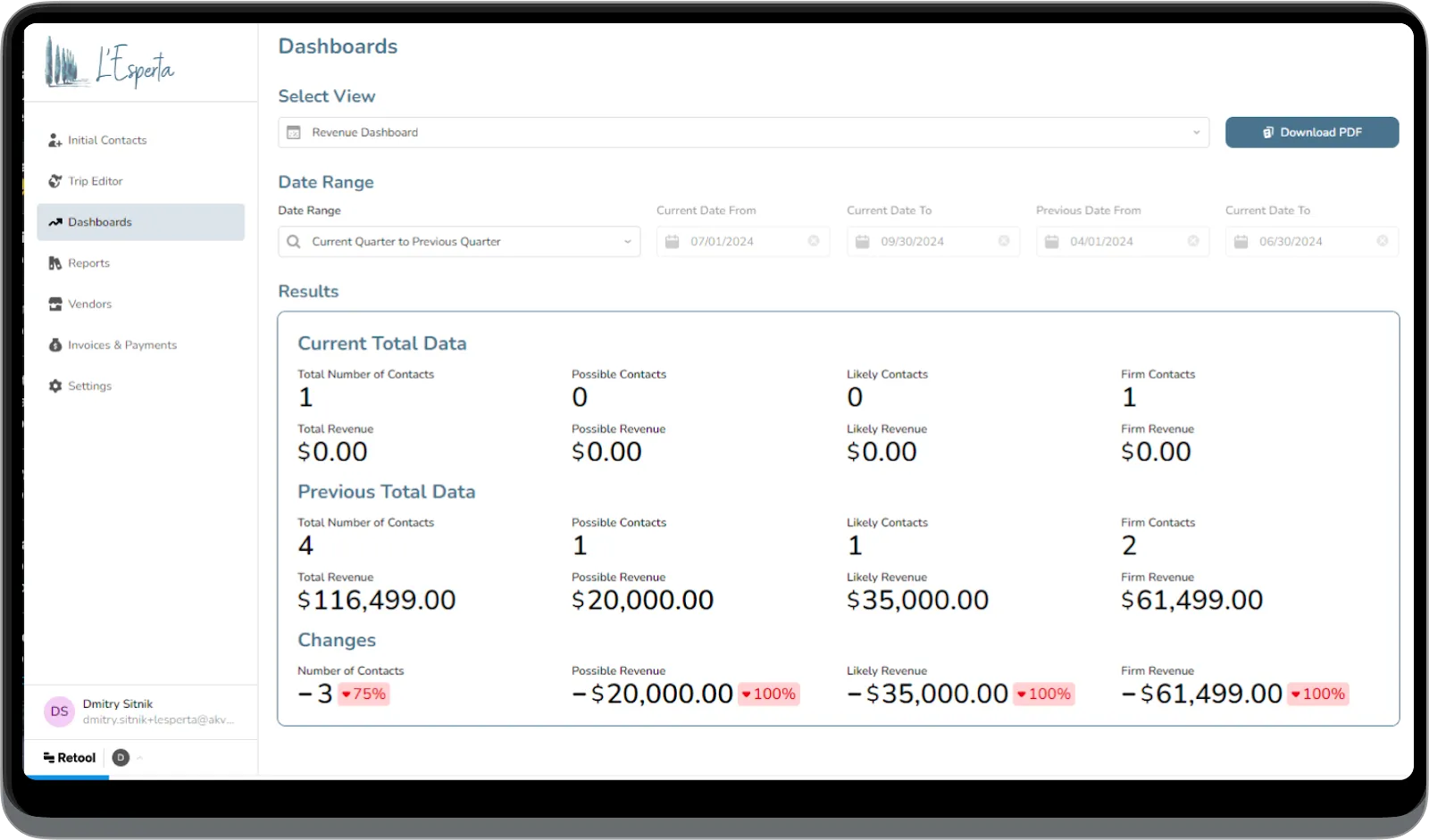
Check out how automating some internal processes with low code saves a travel agency 120 hours per month in this case study.
“Human-machine” collaboration also affects job displacement. While some jobs may be displaced by AI, others will see significant growth, especially in areas like AI modeling and business intelligence, according to this source.
In fact, 69% of CEOs globally acknowledge the need for their workforce to acquire new skills in order to effectively leverage generative AI. Therefore, automation tools enhance human capabilities rather than replace workers, allowing people to focus on tasks that require creativity, empathy, and complex decision-making.
Key benefits of human-automation collaboration
- Increased productivity. Automation handles repetitive tasks, allowing humans to focus on higher-value work, with over 90% of workers recently surveyed reporting that automation solutions have significantly boosted their productivity.
- Improved decision-making. AI provides insights and data analysis, while humans apply judgment and creativity.
- Enhanced safety. Cobots reduce physical strain and risks in hazardous environments.
Automation is evolving, and businesses are using it to support people, not replace them. This makes teams more efficient and opens the door to new ideas. But as work changes, companies need to train employees for more strategic roles. Preparing for an automated world isn’t just about technology – it’s about people adapting and growing with it.
Conclusion: What is the future of process automation?
Automation is becoming more than just a tool for repetitive tasks. Businesses are now using it for strategic decisions and innovation, reshaping industries and boosting productivity.
Business process automation can streamline operations, improve efficiency, and drive growth. But to get the best results, it’s important to stay updated on trends and choose the right approach for your needs. What works for one company might not work for another, so understanding automation is key.
For example, RPA can be a “must-have” for repetitive tasks. At the same time, low-code solutions may be the perfect choice for businesses looking to empower non-technical users to automate workflows.
Our clients often ask us such questions as "Which automation is trending now?". And of course, we can tell them a lot about its most promising types that are here to stay in the long run, like human-bot collaboration or autonomous decision-making. Nevertheless, it is much more important to find namely those automation trends that will address your needs much better than any others.
At Akveo, we design and implement business process automation solutions that are fully tailored to meet your unique business requirements.
Our team works closely with you to understand your challenges and digital transformation goals, then crafts solutions using the right combination of technologies like RPA, cloud computing, AI, or integration with existing tools. See how we can support your growth and efficiency with customized automation strategies – contact us today.
As we enter 2026, business process automation (BPA) is advancing at breakneck speed. From AI-powered decision-making to no-code tools with democratized approaches, automation has shifted from a “nice-to-have” to a “must-implement” strategy.
{{cta="/service-blocks"}}