



What if your business could operate more efficiently, with routine tasks handled automatically? What if your team could dedicate their time to development and growth instead of mundane activities? This is where business process automation (BPA) can make a significant impact.
From low-code development, which speeds up creating custom automation, to advanced AI tools that simplify intricate workflows, BPA can reshape the way your company operates. In today's ever-changing commercial landscape, adopting automation isn't just a choice – it's the key (aka an absolute must!) to stay agile and achieve lasting success. And that's a goal every business strives to achieve.
Let's take a closer look at the key business process automation benefits, and how automation can “turn the tide” for your business. But first, a brief overview.
Business process automation: what it is & why it matters
Process automation implies the use of cutting-edge technology to automate processes and functions across an organization. It's possible through the use of advanced software, tech stacks, and automation solutions, such as machine learning, robotic process automation, and artificial intelligence. The latter has served as a key “driver” for a company to become “automated” in one way or another. With 65% of organizations already leveraging generative AI and innovation booming, the rise of automation – along with increased productivity, creativity, and work quality – is quickly becoming “business as usual” for many companies.
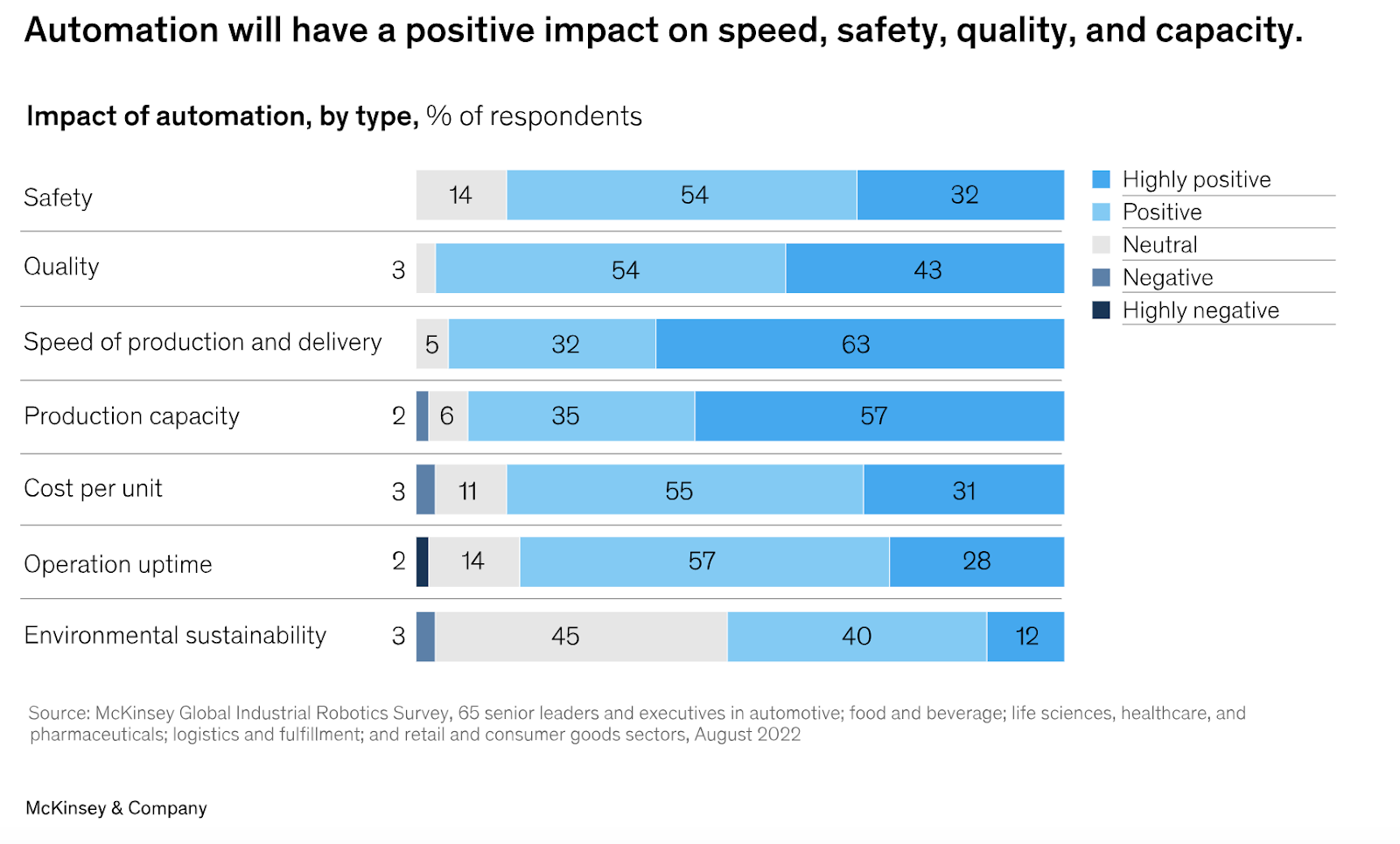
The importance of process automation in business
What does BPA do? It typically focuses on key event-driven processes that are crucial for an organization's growth.
In a broader sense, the impact of process automation is evident in enhanced operational efficiency across various functions, including supply chain management, customer relationship management, financial reporting, marketing activities, etc. In a narrower sense, it focuses on automating specific tasks within critical processes, such as order processing, lead management, and customer support requests.
You may consider BPA for your business if:
Your workflows are cluttered with repetitive tasks
When teams spend excessive time on manual, repetitive tasks – like data entry, invoicing, or customer follow-ups – automation technologies can help streamline these processes. Thanks to automation, processes become less time-consuming, which allows employees to focus on more valuable work.
Your company's rapid growth is ahead of your current processes
When a business grows quickly but you find it hard to keep up (and that could be the case as well), automation can boost process efficiency, reduce costs, and speed up response times. This ensures that customer expectations are met without compromising quality.
You have poor insights into your business operations
When it's tough to gather insights from your business operations, business process automation software can be helpful. It can automate data collection and reporting, giving you real-time information to make more insight-driven decisions.
Or, at the very least, to remain competitive – one more essential thing every business wants to achieve. In fact, 88% of small business owners feel that automation allows them to compete effectively with enterprise-type companies.
Benefits of business process automation software: important must-knows
In the contemporary business world, companies that thrive aren't just the ones with the largest team or the most resources. Instead, they're the ones that operate with speed. The secret? They know how to automate repetitive time-consuming tasks and streamline processes. From collecting invoices to tracking inventory, workflow automation enables organizations to shift from manual, time-consuming efforts to automated workflows.
This shift to automating business processes is critical because, as the saying goes, time is money. And when businesses waste time, they risk losing both. The first major benefit is that a good automation strategy powered by business process management can tackle this issue head-on.
Time is money or how to ensure cost savings
About 60% of the workday is lost to repetitive, mundane tasks, while BPA is effective at handling repetitive activities “without fatigue”, resulting in fewer errors and more consistent output.
Automating processes like invoice approvals, data entry, customer service requests, etc. ensures that tasks are completed in seconds rather than hours. Intelligent process automation also allows businesses to scale operations without a proportional increase in labor costs. In turn, employees can focus on more strategic, value-driven activities.
What are the other key advantages that highlight the benefits of introducing automation tools?
Quality and error control
Workflow automation is essential for enhancing quality control by significantly reducing the likelihood of errors in various complex tasks across industries. For instance, automating invoice processing minimizes billing mistakes, ensuring accurate payments and fostering client trust. In customer data management, automation consolidates information, reducing discrepancies and improving customer interactions. For larger enterprises, BPA enhances compliance by generating precise reports from real-time data, while in manufacturing, it automates quality assurance processes, swiftly identifying defects and maintaining high standards.
Why does intelligent automation improve quality? Automated systems follow established workflows and guidelines. This ensures that tasks are performed consistently and precisely.
While it's impossible to entirely eliminate human error, minimizing human involvement through automation reduces the mistakes typically associated with manual tasks.
Scalability made simple
As businesses grow, their processes can become complex, often leading to inefficiencies.
For example, a rapidly growing e-commerce company can automate the order fulfillment process by integrating inventory management systems. This integration can assist in automatically restocking and generating shipping labels, speeding up the workflow.
Moreover, automation solutions provide the flexibility to adapt to fluctuating customer demands without proportionally increasing overhead costs. Small businesses, for instance, can scale up marketing campaigns and customer service operations during peak seasons without needing to hire additional staff, ensuring timely handling of customer inquiries and orders.
Additionally, automation technologies enhance data management by eliminating such manual processes as data collection and reporting. Thanks to automating business processes of this type, businesses can access up-to-date insights that facilitate quicker decision-making. You can see how our developed solutions have supported our client in this task here.
Improved customer experience and employee satisfaction
But still… What business is complete without happy customers and employees? The thing is that properly integrated process automation not only enhances operational efficiency but also leads to happier individuals involved in the business.
By performing repetitive and complex processes across various business functions, automation platforms free up employees to focus on more meaningful work. And that's one of the major benefits of business process automation. A report indicates that 92% of IT professionals believe process automation allows employees to tackle more complex and strategic tasks.
{{cta="/service-blocks"}}
In this way, BPA creates a “win-win” scenario where both employees and customers experience enhanced satisfaction, ultimately driving the success of the business.
Business process automation: how to approach
Implementing business process automation doesn't have to be a daunting task, especially for SMBs. By adopting a structured approach and utilizing various tools and methods, organizations can gradually automate their processes and achieve efficiency gains.
Here are some strategies for effectively implementing BPA in your business.
Identifying repetitive tasks
To begin automating processes, start by identifying tasks that are repetitive, time-intensive, and susceptible to errors. Once you've done that, you can prioritize what needs to be automated first.
Consider the following when identifying these tasks:
- Routine administrative operations: data entry, report generation, and scheduling meetings can consume valuable time that employees could spend on more strategic initiatives.
- Customer interactions: tasks in customer support, like responding to frequently asked questions or handling order processing.
- Internal approvals: repetitive approval processes, such as expense reimbursements or purchase orders.
Once you've identified the tasks that can be automated, it paves the way for the next strategy – leveraging tools and platforms.
Leveraging low-code development platforms
If your business is looking to automate processes without requiring extensive programming knowledge – low-code solutions may be the choice. There are numerous low-code platforms available, including Retool, Airtable, Appsmith, Webflow, and other popular low-code tools. The important thing is finding the platform that best matches your business goals.
Low-code solutions enable you to create applications and workflows with minimal coding background. They provide a visual interface where you can drag and drop components to build custom solutions.
For instance, businesses can leverage low-code platforms to streamline their scheduling and client management processes. By creating a user-friendly application, companies can centralize data collection, automate data entry, and integrate dashboards that track key metrics. To see how this approach was successfully implemented in a real-world scenario, check out our case study.
{{cta="/service-blocks"}}
Here are several examples of where low-code tools can be beneficial:
- Routine task automation: Low-code platforms can automate tasks in systems like CRM and ERP, such as report generation, saving analysts weeks of manual data entry.
- Workflow optimization: Low-code platforms enable businesses to design and automate workflows that enhance efficiency in various processes, such as approval cycles or project management.
- Customer feedback management: Businesses can use the low-code approach to create applications that collect and analyze customer feedback in real time. This helps companies quickly respond to customer needs and improve service offerings based on direct input.
- Expense tracking automation: Low-code platforms allow for the development of custom expense tracking applications that automate receipt submissions and approval processes.
Learn more by visiting our low-code blog section
Integration automation with current systems
A key strategy for integrating business process automation effectively is to focus on implementing automation within your existing departments and systems. For instance, businesses can link their CRM and ERP systems with low-code platforms to automate processes like order fulfillment and/or inventory tracking. This integration allows sales and logistics teams to access accurate information.
2 important points to consider
- Maintaining data consistency: Ensure that data is transferred smoothly across platforms to maintain accuracy and consistency. This reduces the likelihood of errors that may occur from manual data entry or isolated data silos.
- Utilizing APIs: Leverage application programming interfaces (APIs) to connect different software solutions. This facilitates communication between various tools, leading to a more streamlined workflow.
Wrapping up: business process automation benefits and pitfalls
For a company looking for ways to streamline its operations, business process automation is one of the powerful ways to consider. However, every advantage entails its own pitfalls.
Let's take a quick look at some of the critical business process automation advantages and disadvantages (aka the bottlenecks) that businesses should keep in mind.
Increased process efficiency
Automating time-consuming tasks speeds up workflows and reduces human error, freeing up employees for more creative work.
Bottleneck: high initial costs
The efficiency gains come at a price – setting up BPA requires a significant initial investment in software powered by machine learning and artificial intelligence, training, and IT infrastructure. Nevertheless, automation tools and well-organized business process management help to reduce costs in the long run.
Cost savings
By reducing manual labor and minimizing errors, BPA helps businesses cut operational costs in the long run.
Bottleneck: change management
Despite the potential savings, implementing BPA can face resistance from employees who may be apprehensive about learning new systems or fearing job displacement.
Scalability
As businesses grow, BPA allows them to handle more processes and clients without increasing staff, supporting smooth scaling.
Bottleneck: over-reliance on automation
Relying too heavily on automation may lead to problems when dealing with complex business processes that still require human judgment and oversight.
Better compliance
BPA helps maintain compliance by ensuring critical tasks are logged, tracked, and completed accurately, making regulatory audits easier.
Bottleneck: technical issues
However, automated systems can experience technical issues or bugs, leading to workflow disruptions and potential downtime.
Happy customers
With faster processes and fewer repetitive tasks, customers receive better service, and employees have more time for work that requires an out-of-the-box approach.
Bottleneck: limited flexibility
Once automated, processes may be harder to modify quickly, which can limit a company's flexibility if business needs change.

Conclusion
The importance of automation in business is obvious – it helps drive your organization forward and stay ahead of the competition. Whether you need customized software development, low-code solutions, or business process automation consulting, our experts are ready to guide you in identifying the most effective and cost-efficient ways for your business to succeed. You can contact us at any time in case you need help.