


Throughout the history of humankind, we have been striving to facilitate the processes we need for our survival and well-being. People made all kinds of tools to gather resources, catch prey, and improve their households and leisure. Then, after some time of use and trying, upgraded them to accomplish the same tasks faster and more efficiently.
In the modern world, this part of human nature continues to drive innovation in science, technology, and other domains. Let's take a look at the evolution of programming languages. It's fascinating to see how building software has been becoming easier and faster over two decades.
Starting from the long lines of code that demanded a broad understanding of software engineering, programming language, and mathematics and moving toward the simplification of the software development process. And now, the evolution of software development is approaching its apotheosis – low-code/no-code development.
What are low-code and no-code development paradigms?
Low-code & no-code platforms are the SaaS solutions that facilitate the software development process. Both types of platforms can also help in the creation or complement the existing solution or some part of a system. It can be either front-end/backend parts of the software or just request-handling tools. The software you create depends on the approach you choose and the platform too. The major differences between them lie in the audience they serve well, and the complexity of the development process.
The first question that we should answer is: What is low-code and no-code development? As you can guess from the names of these approaches to software development, the key difference will be related to the role of coding in the app creation process.
Codeless, zero code, and no code are different names of the same approach to application development. These development tools presuppose that to create business apps, users do not need to write and integrate any code manually.
Meanwhile, low-code development platforms require some coding knowledge from their users. Usually, low-code software builders' graphical user interface has a component-based structure with drag and drop features and a certain number of ready-made templates. At the same time, low-code provides you with more flexibility and allows you to build customized business applications tailored to your needs.
Low-code development
Low-code development platforms will require a solid budget not only to pay for the plan but also to hire some developers to build the app. Moreover, you will probably need a CTO to help you pick up the right framework, to begin with. If the framework isn't able to provide you with the functions and integrations for your business needs, there's no point in wasting your time and money.
Of course, this approach is more user-friendly and beginner-friendly than traditional development. Nevertheless, the range of tasks that can be performed by citizen developers is rather limited. They can build some simple apps. But when it comes to integrations or customization, here's when professional developers should enter the game.
What are low-code examples?
Given the growing demand for such tools, the range of available low-code platforms is continuously expanding. Here are a couple of examples of such platforms used for software development with minimal coding.
Retool
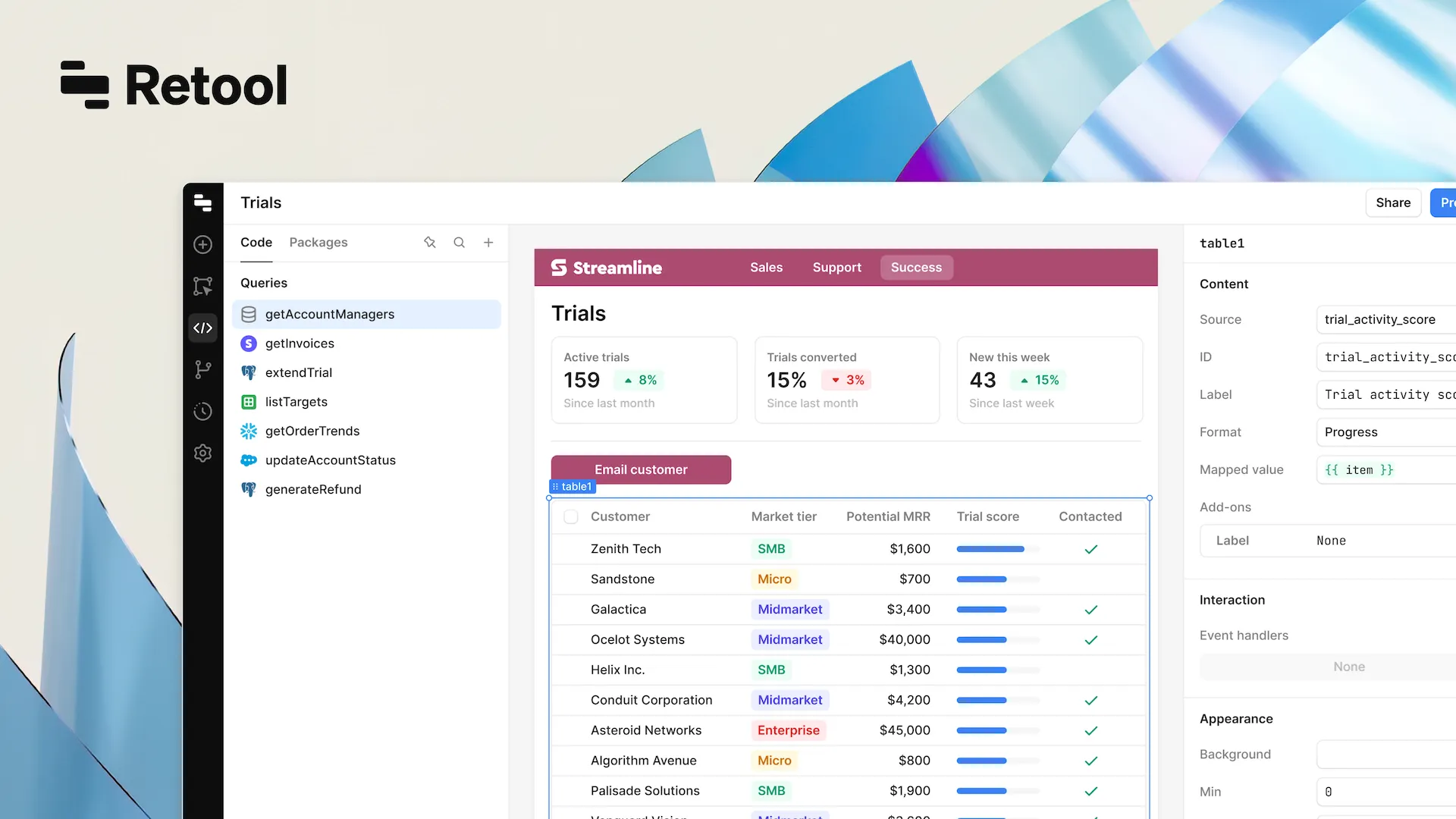
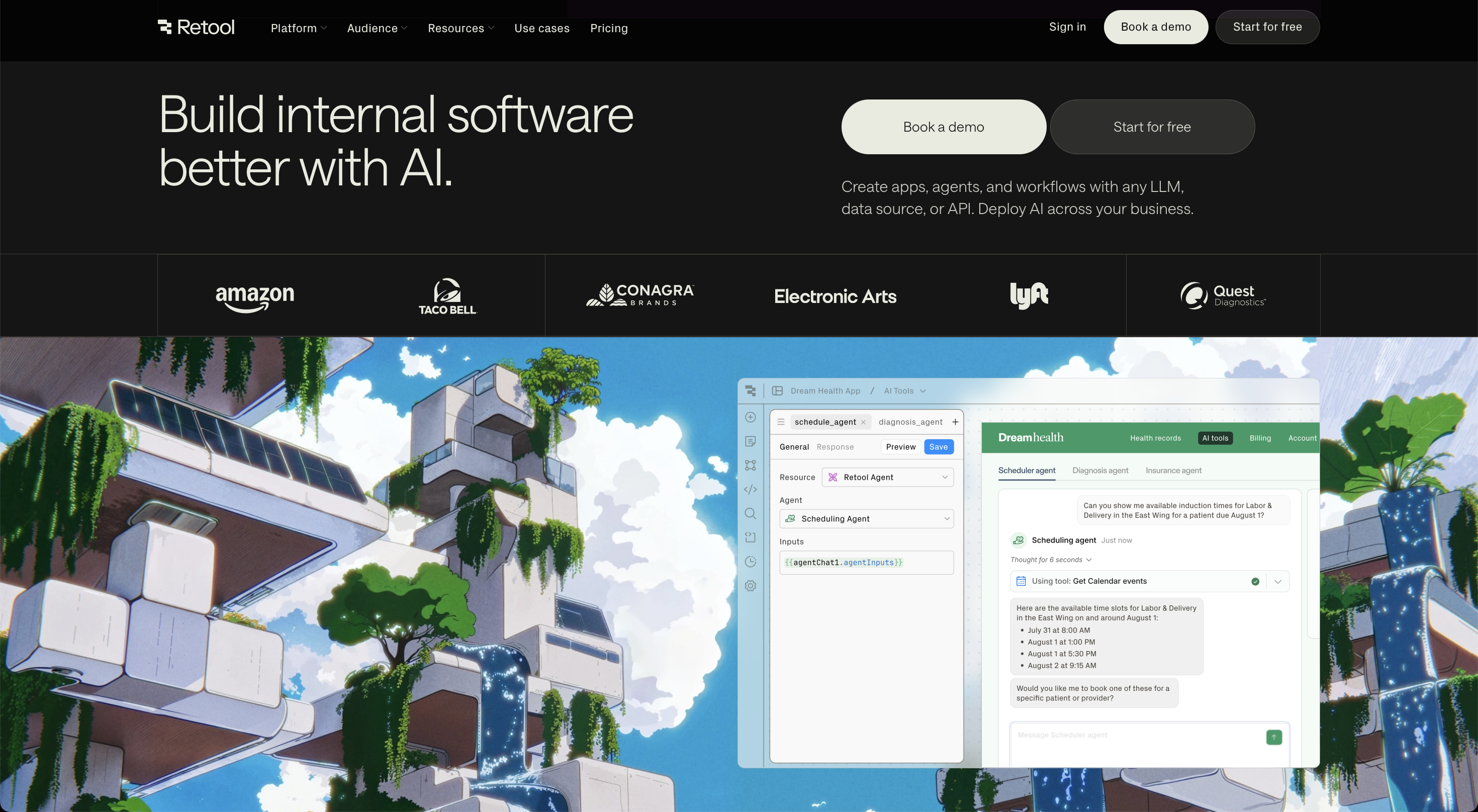
This powerful application development ecosystem helps businesses quickly build internal solutions. With its help, professional developers can seamlessly integrate numerous third-party tools, connect databases, and build custom components to address the needs of specific business workflows.
OutSystems
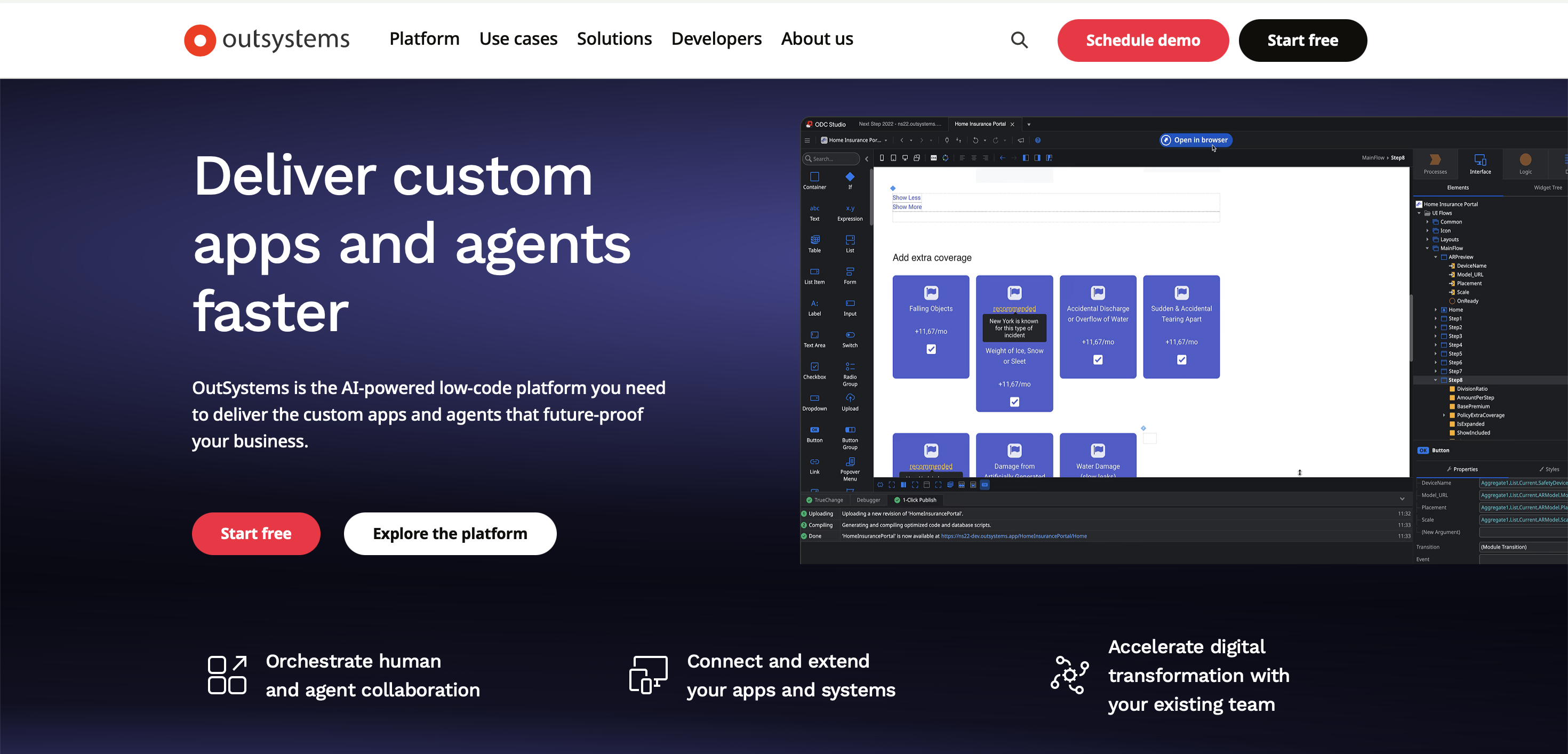
It is an enterprise-grade low-code platform for web and mobile apps that can be used for building even complex solutions for specific business needs. It supports AI, DevOps, and integration with legacy systems.
Appian
This low-code app development platform provides empowers developers with pre-tested, secure components that demonstrate excellent performance across different devices. Appian mainly focuses on process automation and workflow optimization and combines low-code with AI and Robotic Process Automation (RPA) functionality.
Mendix
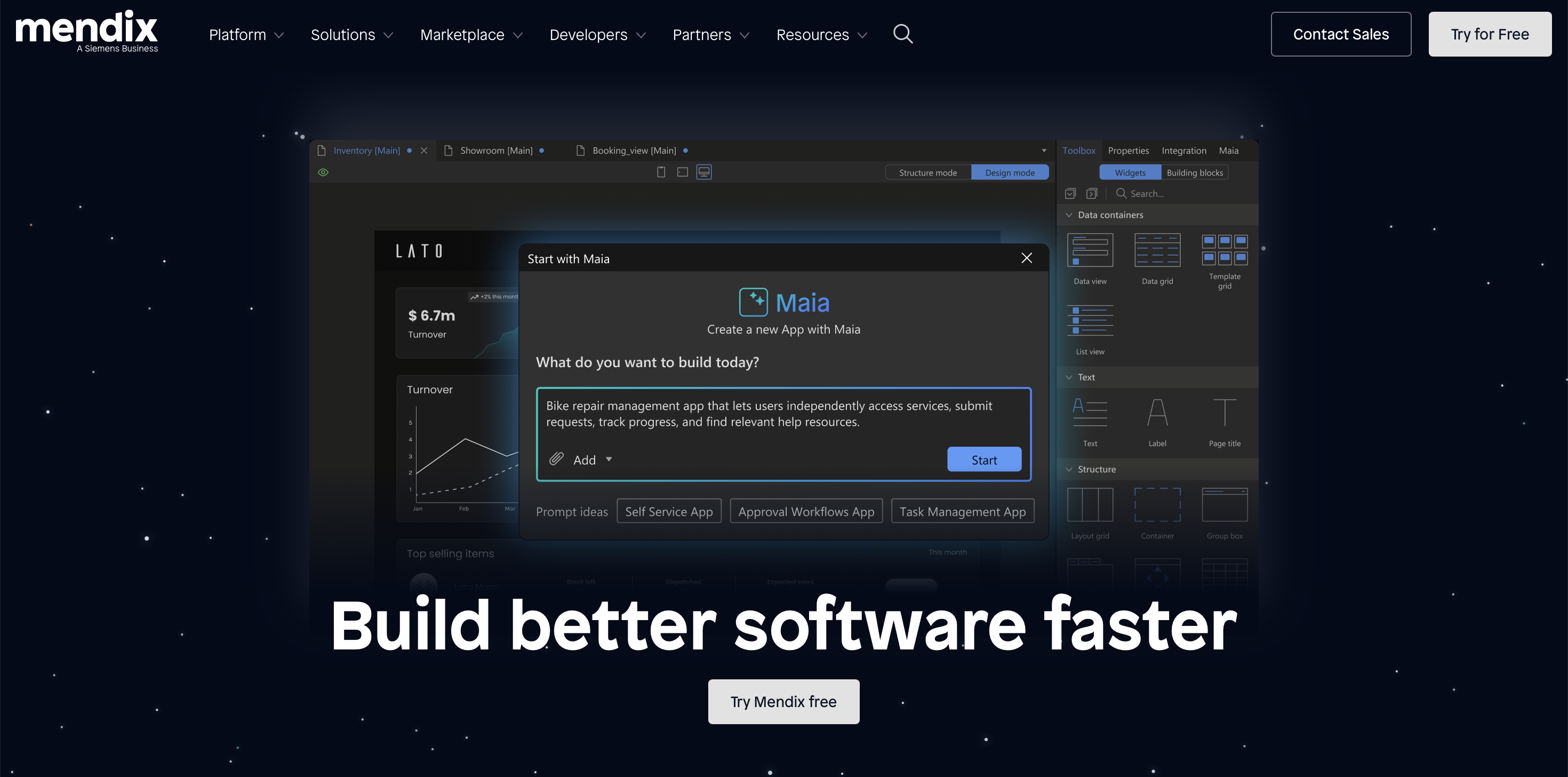
This is a popular low-code software development platform that is ideal for both simple and complex enterprise solutions. For example, it is often chosen for building offline-first native mobile applications, responsive web apps, and PWAs.
Pros of low-code development platforms
- Flexibility. Low code enables developers to add manually written code when needed. This opens opportunities similar to those available in custom coding.
- Scalability. Many low-code platforms can handle enterprise-level applications, supporting complex workflows and integrations.
- Ability to create unique functionalities. Even if you have very specific workflows that require unique tools, it can be possible to introduce them based on your needs.
- Integration capabilities. Such platforms support APIs, databases, and third-party services. This makes it easier to connect with existing systems.
- Built-in security and compliance. Many platforms come with pre-configured security features and can ensure great regulatory compliance and data protection.
- Unique styling options and white labeling. Thanks to the customization of UI/UX elements, businesses can create solutions that will look and feel just like all other tools in their wider IT ecosystem.
Cons of low-code platforms
- Learning curve. While easier than traditional coding, low-code platforms still require some technical knowledge, especially for advanced customization.
- Dependency on tech experts. Businesses need to have CTOs to choose the right platform along with at least Junior/Middle developers to build the app itself.
- Security risks. Many low-code platforms are cloud-based. Therefore, data privacy and security concerns may arise, especially for industries with strict compliance requirements.
- Platform dependency. If the platform provider decides to discontinue support or updates in the future, businesses using the platform might face challenges in maintaining their applications.
No-code development
No-code development platforms are accessible for non technical users. Such platforms are like software constructors where you simply take the needed components and connect them to the no-code platform UI (canvas). The canvases of the no-code platforms usually have a strictly predetermined structure and allow stacking of the app components on top of each other, at times.
The typical no-code platform users are citizen developers. For example, they can be business managers who neither have any technical skills or programming knowledge to create apps using low-code platforms nor the budget to hire professional developers and tech experts.
Apps built with no-code platforms are usually quite simple software solutions with basic functionality and rather limited integration capabilities.
No code solutions do not rely on custom code, which restricts their functionality, especially in comparison with products created by professional developers who use traditional software development approaches.
What are no-code examples?
Below you can find the names of no-code platforms that are designed to be used not only by experts with tech skills but also by citizen developers.
Softr
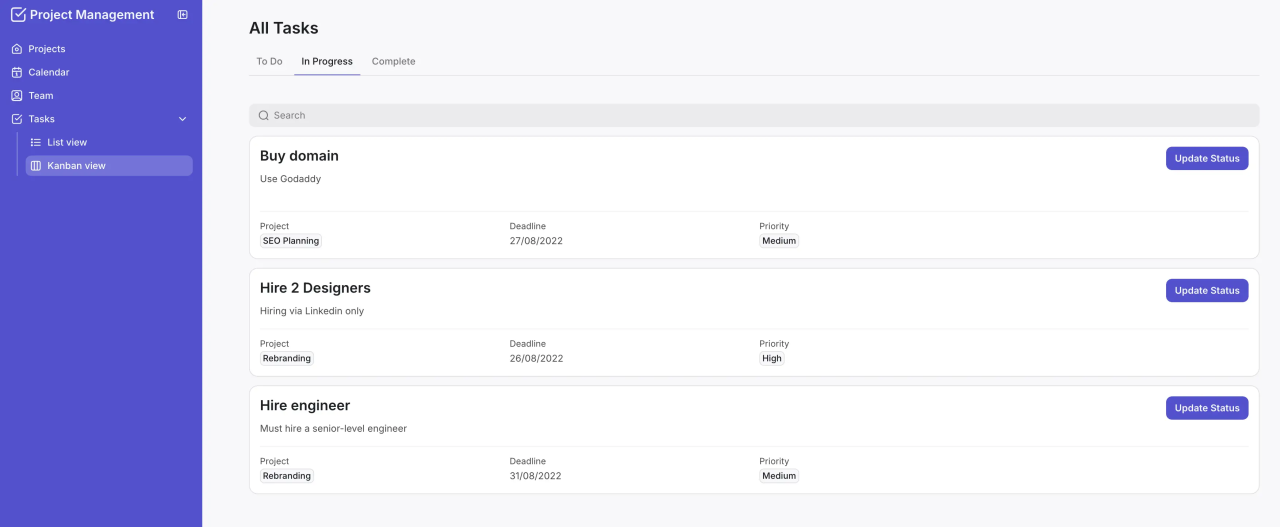
It is a no-code platform focused on building secure, production-ready business apps such as client portals, CRMs, dashboards, and internal tools. Softr connects directly to data sources, including Airtable, Google Sheets, Notion, HubSpot, ClickUp, monday.com, SQL databases, and REST API, or you can use its own relational database for more control. Teams can set up role-based access and granular permissions while also enabling a built-in AI assistant for their apps. This makes Softr a strong choice for SMBs needing to turn siloed data and workflows into full-stack business apps.
Bubble
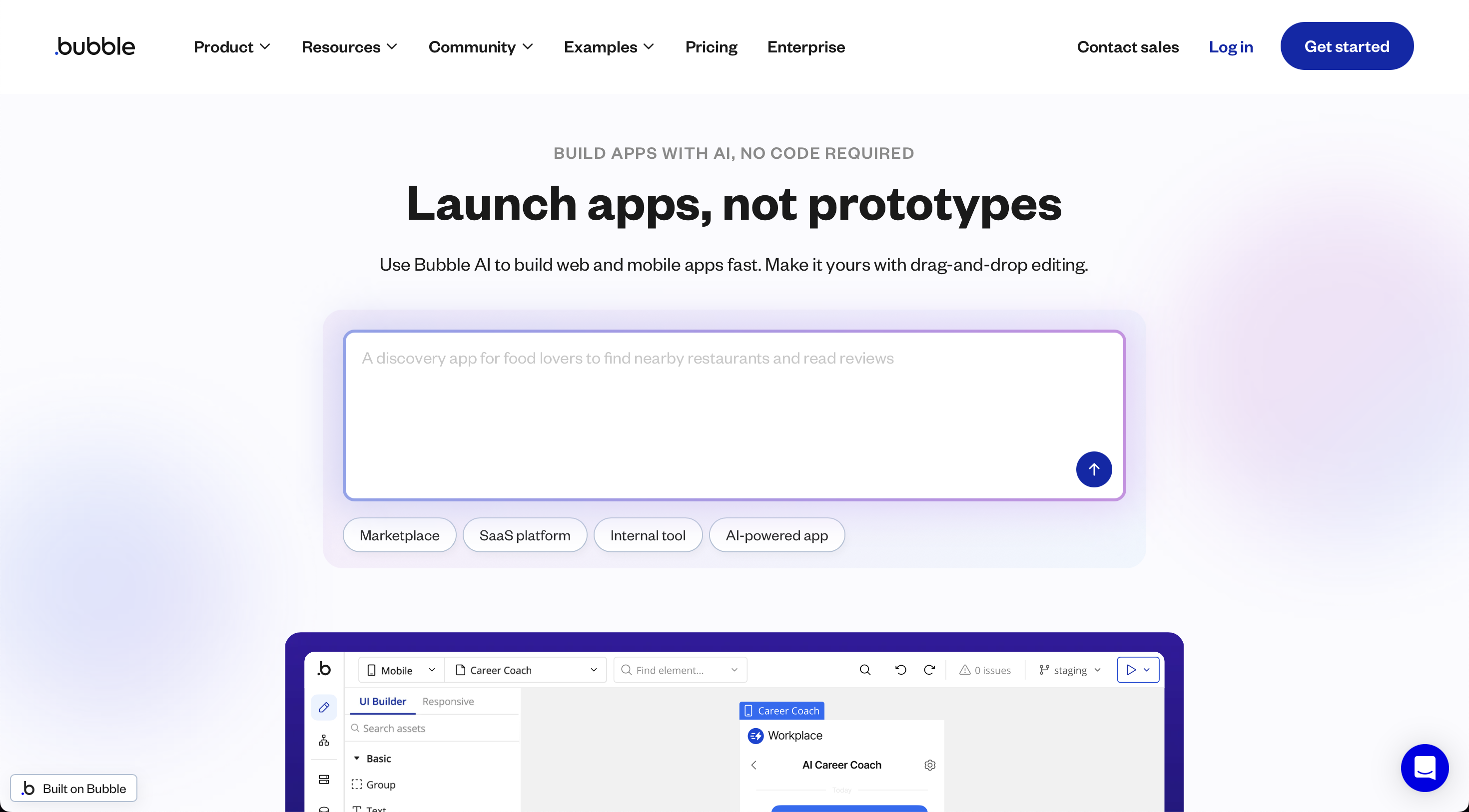
It is a full-stack no-code app development platform. With its help, even citizen developers can create feature-rich marketplaces, CRM platforms, apps powered by artificial intelligence and machine learning functionality, subscription services, and many other solutions that boost their business growth.
Zapier
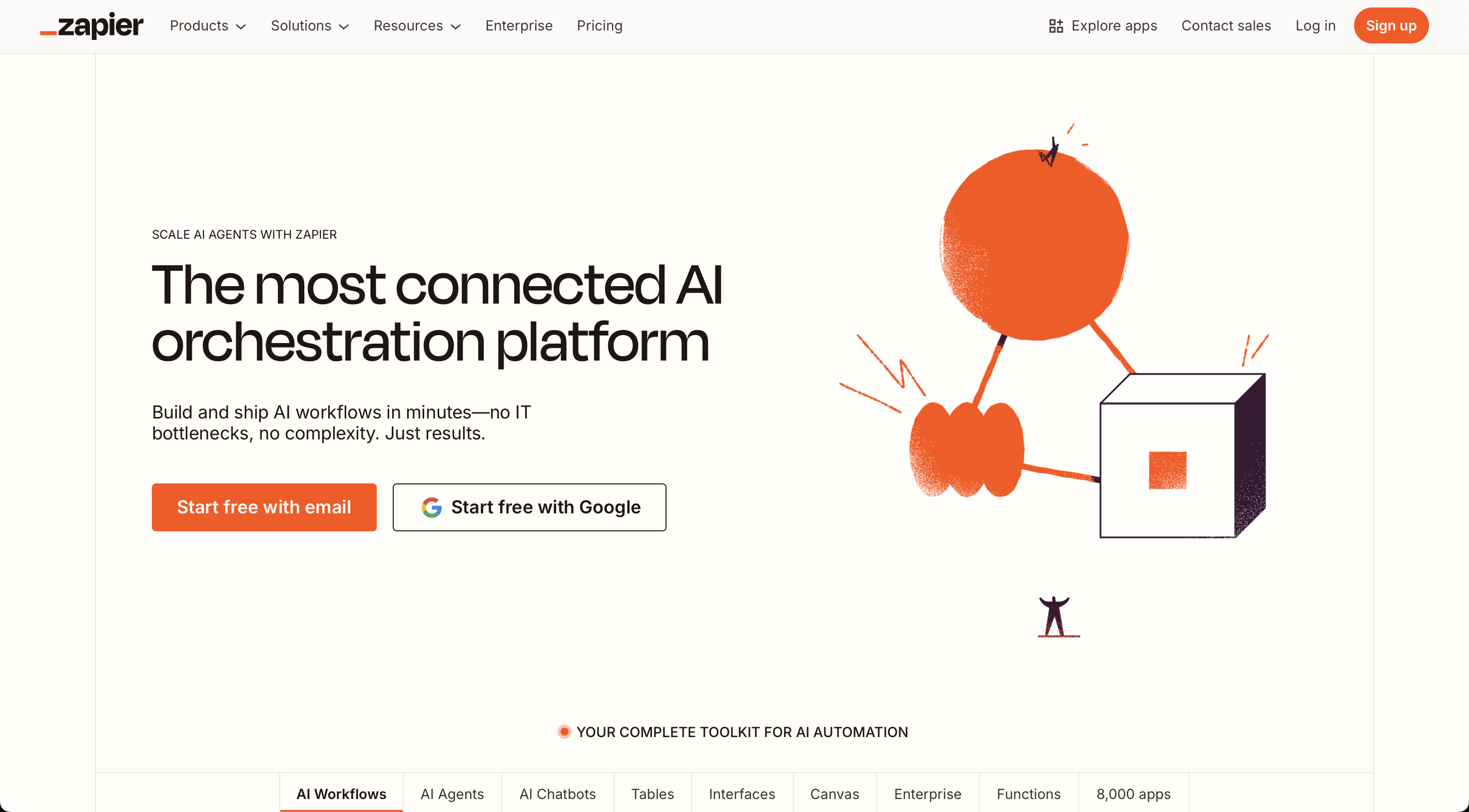
It is a no-code automation platform that puts the power of automation in the hands of citizen developers. To work with its functionality, there is no need to apply traditional coding. Zapier enables businesses to integrate their automated workflows instantly with over 7,000 different applications. Moreover, all workflows can be enhanced with AI capabilities, such as personalizing emails, analyzing data, or summarizing content.
Glide
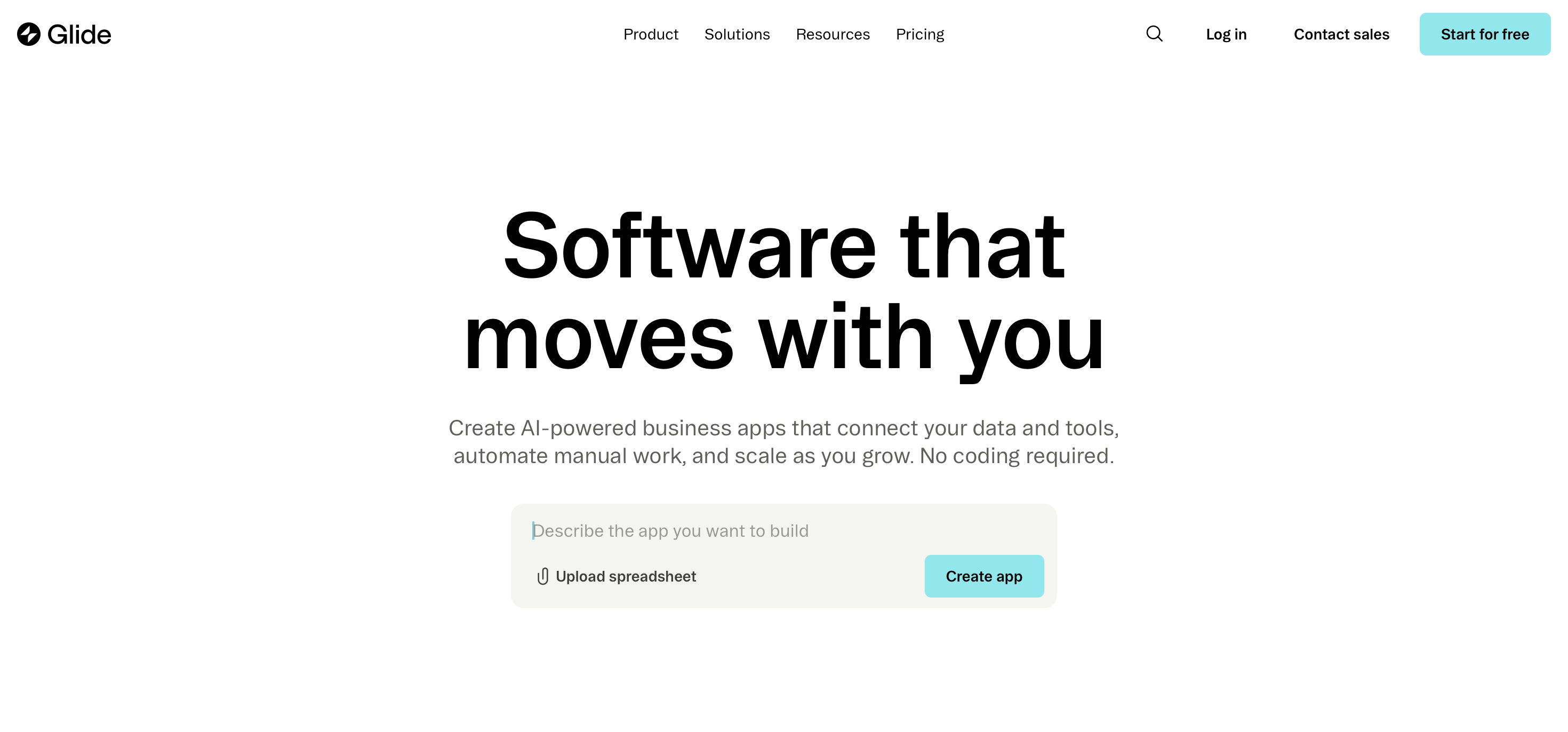
This no-code app development solution is designed to enable everyone to build modern, AI-driven apps that can transform scattered data into actionable insights and streamline manual tasks. While Glide functions well on desktop, its layout and functionality are optimized for mobile. That's why it can become a very good choice for mobile-first apps.
Bildr
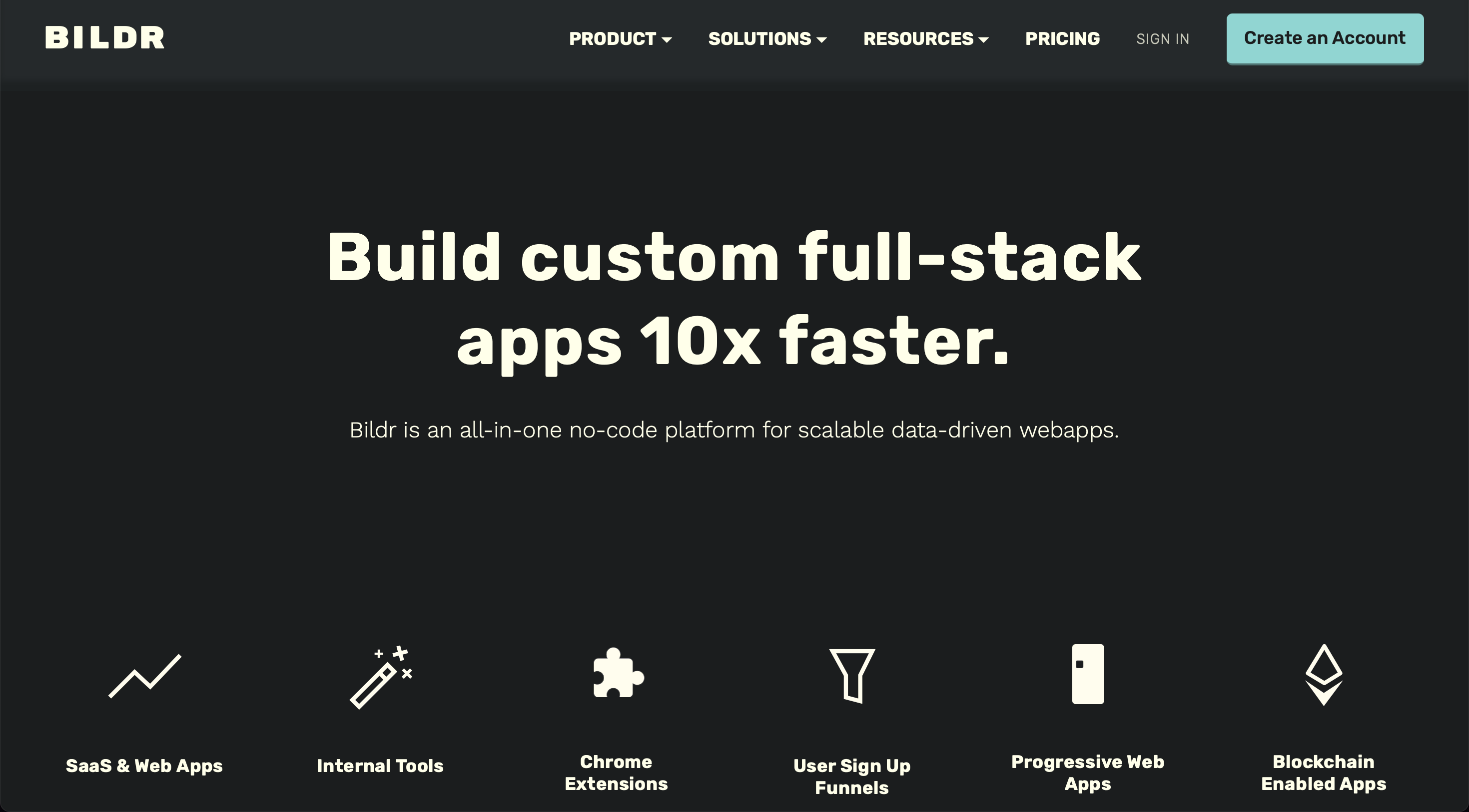
It provides all-in-one no-code development tools for creating scalable data-driven web apps. It allows businesses to create seamless and dynamic app interactions, introduce logic and conditionals to manage any scenario, and implement custom actions into the powerful toolkit. With this no-code editor, users can design responsive pages that will look beautiful on any device.
Pros of no-code platforms
- Accessibility. For no code solutions no coding skills are required.
- Faster development. Drag-and-drop interfaces and pre-built components allow users to build apps much faster than with traditional coding.
- Flexibility. They allow for quick changes and updates without deep technical expertise.
- Lower cost. This approach reduces the need for expensive developers, making app development accessible to startups and small businesses.
Cons of no-code platforms
- Extremely limited integrations. The integration with your favorite business tools may not be supported. Custom integrations are either too challenging or not supported at all.
- No room for app customization. Such platforms have restrictions on custom functionality. This makes them unsuitable for complex applications.
- Performance limitations. Applications built with no-code tools may not be as optimized or efficient as custom-coded solutions.
{{cta="/service-blocks"}}
Types of low-code/no-code tools
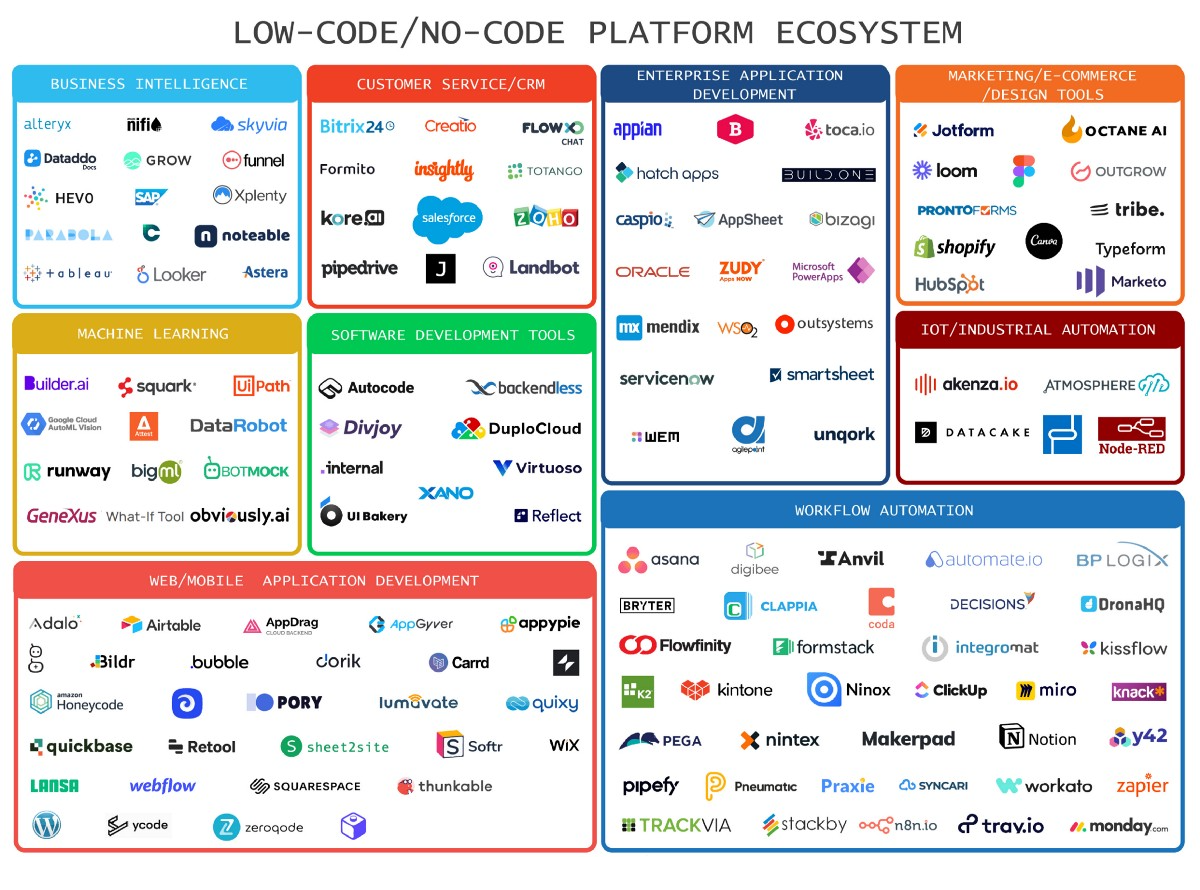
There are several distinctive types of low-code and no-code platforms that differ by the use cases they serve. Since low-code frameworks offer wider flexibility and customization capacity, the area of application of these tools is wider than that of no-code platforms. But still, their application fields have pretty much in common. Here are the most widespread use cases of low-code/no-code development frameworks as of 2025.
General purpose frameworks
You can guess the use cases of this type of low-code platform by its name. General purpose frameworks allow you to develop almost any type of application be it mobile/web applications, workflow tools, etc. There are general-purpose low-code tools for both backend and frontend development.
Internal tools builders
Such low-code tools focus on helping business owners build process optimization software. With the internal tools builders, you can create workflows, and forms and integrate those with other elements of the system a business uses. Usually, business owners leverage low-code development to create a more convenient representation of the info they have in the form of Excel tables.
Database management consoles
Platforms for creating apps that represent the data stored in the database and allow users to interact with it. These are simple tools to manage the database information, get access to the internal business materials, and add new data to the storage. You can make such applications with the help of the front-end-oriented low-code and no-code platforms.
Mobile app development platforms
Low-code and no-code platforms for creating native and cross-platform mobile apps for various devices. The logic of the app creation process is the same but the components are mobile-specific. Most often, businesses opt for the low-code frameworks for the wider customization capabilities so much needed for the branded mobile application.
Web app development
The same story as for the low-code/no-code mobile app builders except that there is slightly less need for unique components.
Benefits of low-code/no-code development for businesses
The low-code and no-code development platforms share their primary purpose. Thus they bring very similar benefits but to different groups of users. That's why in our article we are considering the advantages of no-code systems and low-code platforms together and will compare them mainly with what traditional app development methods offer.
Rapid application development
Both low-code platforms and no-code tools are the go-to choice of businesses that seek to create software solutions and digitize their business at short notice. Internal tool builders accelerate the application development process in many ways. Firstly, they free you from the necessity to spend time searching for software developers.
Lower costs
The subscription for a low-code platform costs much less than a team of professional developers. By building your app with low-code tools, you can get the same result for the 50-100 bucks subscription instead of thousands of dollars of salary. Let alone all the related expenses on the law procedures, bonuses, and insurance.
Enhanced scalability
As long as the no-code/low-code application development is a fast process, you can also scale up your system easily. Relying on the low-code tool, you can add new functionalities, app pages, and other elements. Of course, it may bring additional costs for the platform subscription. But anyway, scaling with low-code development platforms would be a faster process than the full custom traditional development.
Flexible applications
Using no-code/low-code platforms, you can easily adjust your app's functionalities to comply with various market changes and regulations. In the world of rapidly evolving technologies, it's an extremely valuable asset to have. Outsourcing software developers or, even, keeping them on salary just to make all the code changes definitely won't be cheap.

How to choose the right low-code/no-code development platform?
Clarify your business needs
Make a list of features you'll need to have in your app. It's crucial to select the right development platform. If you don't need a complex app then a no-code platform would be enough. On the contrary, to cover the need for more complex apps, custom branding, and unique integrations you will need some kind of a low-code platform. Clearly define your goals, plans, and budgets to make the first step toward your new application.
Get professional assistance
Once you have the proper perspective of your business needs, you should decide whether to look for professional help or not. As you can understand, no-code platforms can be used easily by a non-tech person. At the same time, you may need a brief consultation with a pro to choose the platform to create all the necessary functionalities for your app.
With the low-code platforms, things get much more complex. You will need professional advice if you don't have any understanding of the low-code platforms or a CTO in your team. Moreover, low-code application development process There are many options to get professional support for various budgets and project scales.
Outsource low-code development companies
Low-code development is a rare service at the moment but a rapidly developing one. At the moment, the market is in the initial stage of its expansion, so you can find only some low-code development companies opposing the increasingly rising demand. As the demand for custom low-code development rises, the value of the specialists that have a broad outlook on low-code tools and can produce software using them does too. Thus, this is the option for SMBs as well as large enterprises with solid budgets. But for the price of professional low-code development come the same benefits like custom components, integrations, fast development, and a bug-free application or tool.
In-house low-code development team
Alternatively, you can hire a CTO and developers to become a part of your team. This option is for you if you'll need developers for a relatively long period to support and customize your low-code app. However, recruiting and hiring take time, especially when it comes to a good developer or a software engineer. Thus, we recommend making sure you have enough time to hire low-code developers and onboard them.
Freelancer low-code developers
You can hire only a CTO and freelance developers from any trusted freelancer platform like Upwork. It can be the most cheap way to get low-code development done if you have no coding skills. Hiring freelance developers can cost much less if they are based in Eastern Europe or other countries where the low-code development services have lower rates than in the USA. Anyway, it demands some time to find the developers.
Final word: Is low code/no code the future of app development?
Low-code and no-code platforms are undoubtedly shaping the future of app development. And their role in this industry is expected to grow given the advancements in low-code/no-code technologies and the possibilities that they provide to businesses.
However, it is still highly unlikely that they can fully replace traditional coding. These tools empower businesses and individuals to build apps faster, automate workflows, and reduce development costs. What is even more important, all this is possible without requiring deep programming expertise.
Nevertheless, complex and highly customized solutions can be built with no-code tools. They will still require traditional coding.
That's why it will be sensible to make a conclusion that the future of software development likely lies in a hybrid approach. It means that while low-code and no-code will accelerate the development process, professional coding will be necessary to ensure the scalability and advanced functionality of custom solutions.
If you decide to call for the assistance of professional low-code developers, you can start here. Akveo has much experience helping companies use the potential of low-code and no-code development tools for creating unique and branded applications and tools using the top app development platforms like Retool, Appsmith, UI Bakery, Airtable, Budibase, and many others.
Meet our CTO by watching the video below and contact us if you are ready to start your low-code app development.