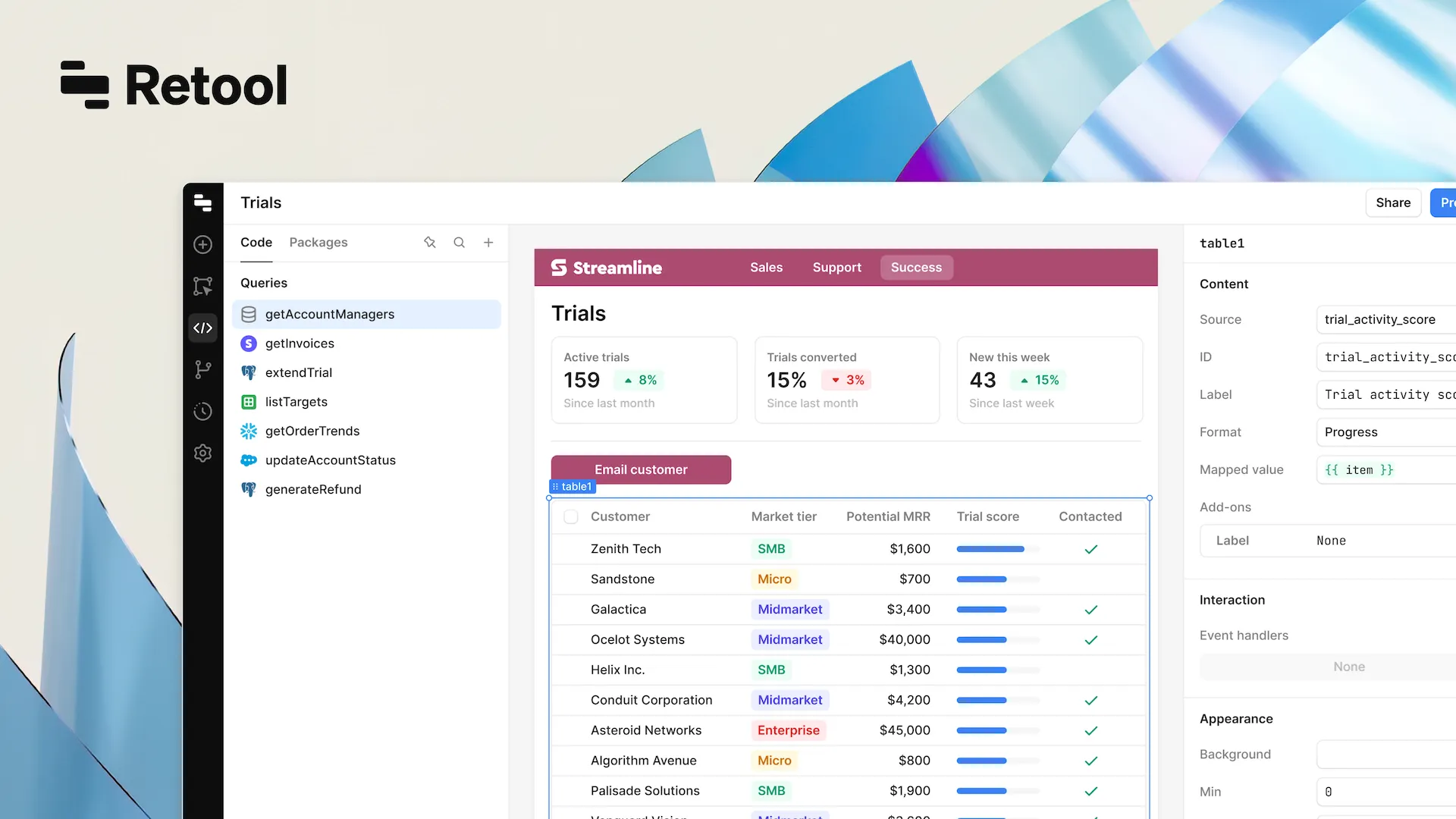



The process of digitalization across different industries is gaining momentum. If some tasks used to be performed only manually some years ago, today businesses are trying to implement reliable automation solutions. Digital tools can greatly facilitate a lot of processes for teams and make their work in general more result-oriented. While off-the-shelf solutions often can't address all individual requirements of companies, they need to build appropriate apps and systems on their own.
While traditional custom software development can be too expensive and time-consuming, these days more and more businesses turn to low code development services. In this article, we'd like to talk about the benefits of this approach and explain how to choose the best provider of such services.
But before we dive deeper into details, let's focus on some basic info.
What is low-code application development?
Low code programming is a modern approach to building software apps. It enables people, even non-tech experts, to create solutions with minimal manual coding. This approach relies on using intuitive, visual interfaces and pre-configured building blocks. As a result, it can ensure much faster application development and deployment in comparison to traditional methods.
To build a low-code app, you need to opt for an appropriate platform. Low-code development platforms are special environments that provide all the required tools for designing, building, and managing applications.
If you want to better understand what is meant by low-code development, it is necessary to take a closer look at the core functionality of low-code platforms.
The most important features of low-code development platforms
Drag-and-drop interfaces and visual workflow automation
Simplified UI elements make it possible for users to visually construct apps by dragging and dropping components into the required place.
Pre-built modules
Modern low-code tools provide ready-to-use templates, widgets, and components for the most common functions like user authentication, reporting, and data integration. With them, low code developers and non-tech users solve some tasks in a couple of hours instead of a couple of weeks that will be required for traditional coding.
Integration capabilities
Such platforms usually have built-in connectors to integrate with third-party services and APIs. However, it's vital to remember that they may offer different integration possibilities. That's why you need to verify beforehand whether the chosen platform meets your requirements.
Collaboration tools
Today the majority of such platforms, including enterprise low code tools and solutions for small businesses, are equipped with collaboration features. They enable team-powered development, real-time feedback, version control, and role-based access.
Security and compliance features
With the increased focus on data privacy and security in the business world, you need to use a platform that implements security protocols and data encryption to safeguard sensitive information. This will ensure adherence of your apps to compliance standards like GDPR, HIPAA, and others.
As a result, the use of such platforms helps to reduce or even fully eliminate the need for extensive coding. It means that companies can focus more on solving their pressing business challenges rather than dealing with the technical complexity of programming.
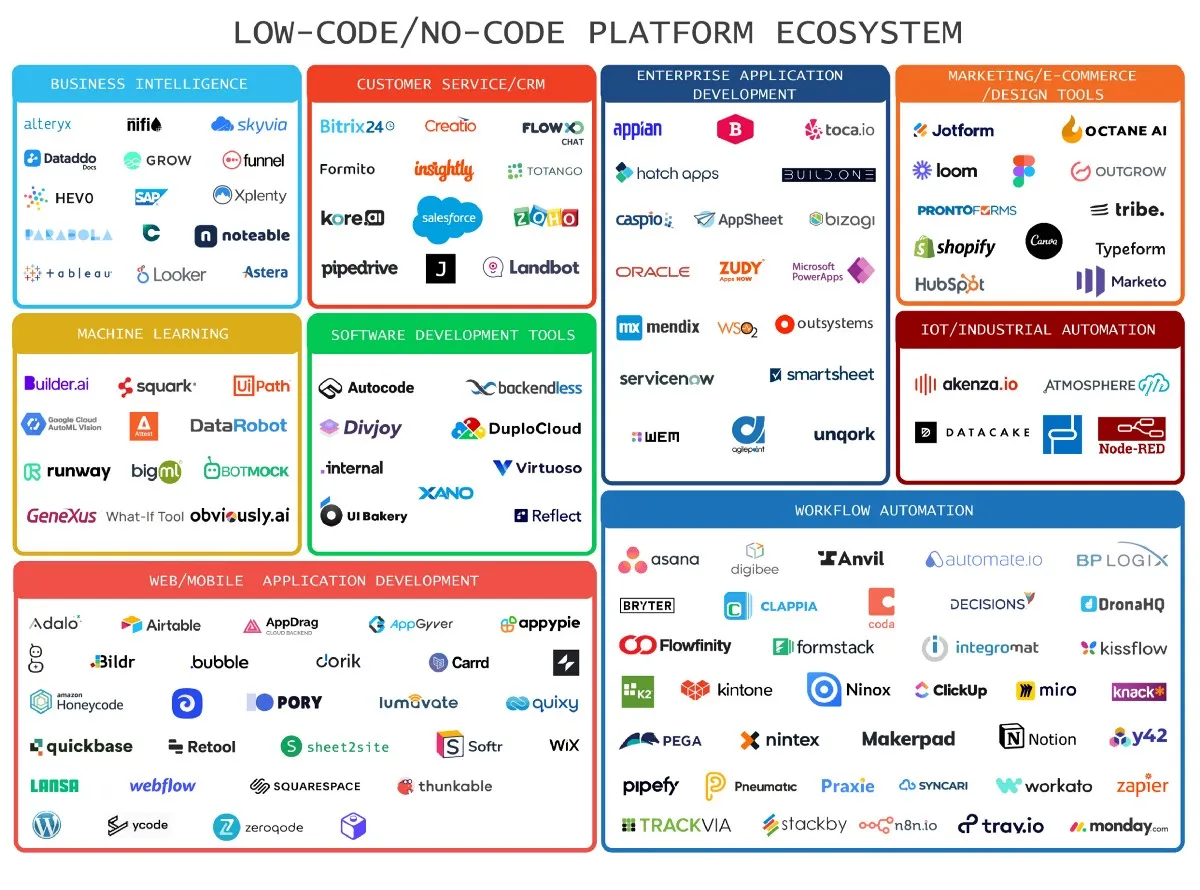
Today there is a wide range of platforms that offer tools for low-code application development. Retool, OutSystems, Mendix, Appian, Zoho Creator, and Appsmith are among the well-known low-code examples. In our articles, we are talking a lot about different solutions of this kind. That's why if you are interested, we offer you to read about top business process automation software and the best platforms for low-code mobile app development.
Pros of low code development
Today the popularity of low code development platforms and demand for low code development services are continuously growing. It is explained by the convenience and flexibility of this approach, which makes it suitable for businesses of all types and sizes across different industries. Let's analyze the key advantages of this app development method.
Fast development process
One of the biggest benefits of low-code development is its ability to accelerate the app development lifecycle. With pre-built templates, drag-and-drop functionality, and automated workflows, both professional developers and citizen developers can create applications significantly faster than in traditional coding methods. This rapid application development allows businesses to respond quickly to market changes and customer demands.
Involvement of citizen developers
Low-code application platforms make app development available to a wider audience, including business users without coding knowledge. With such platforms, organizations can enable citizen developers to create and modify business applications, which is impossible in traditional development. As a result, companies can reduce reliance on professional developers and make sure that new solutions and automated business processes meet the requirements of the team members.
Reduced costs
Traditional coding presupposes the participation of a team of experienced developers. However, hiring such experts to create apps based on your specific business needs can be costly. Low-code platforms enable organizations to build business applications with fewer professional developers and less time. This can greatly reduce labor costs. Apart from this, maintenance and updates are easier and less expensive.
Scalability and flexibility
Modern low-code development technologies offer the ability to scale applications efficiently. Whether it's a small internal tool or an enterprise-grade business application, organizations can start small and gradually expand as needed. Many low-code platforms can also be easily integrated with existing enterprise systems and business services.
Better risk management
Low-code platforms ensure all the required tools and conditions for rapid prototyping and iterative application development. In such a way, the use of low-code platforms helps to reduce the risks associated with traditional software development. Businesses can quickly test ideas, gather feedback, and make adjustments without significant investments in time or resources.
Cons of low-code software development
If you are considering the use of a low-code platform instead of traditional development methods, you should be aware of the potential drawbacks of this approach.
Limited customization
One of the biggest drawbacks of low-code platforms is their limitations in customization. During the development process, users rely on pre-built components and templates. And it can be pretty challenging to implement unique or highly specific functionalities, especially for those who do not have strong coding knowledge. This can be especially problematic for businesses with complex or highly specific software development needs.
Performance limitations
Since low-code apps rely on a platform’s pre-built architecture, they may not be optimized for high-performance use cases. Not every low-code platform can efficiently handle complex logic, high-volume transactions, or real-time processing.
Vendor lock-in risks
Many low-code platforms operate as proprietary systems. It means that when a business starts creating applications within its ecosystem, it becomes heavily dependent on that vendor. If the vendor changes pricing, discontinues features, or ceases operation, it may be very difficult to migrate the built applications anywhere else.
Security concerns
With low-code platforms, organizations have less control over security protocols and data governance than in the case of traditional development. This can pose significant risks, especially for businesses handling sensitive information.
Scalability issues
Low-code platforms are often not designed for enterprise-level scalability. As created applications grow in complexity and data demands increase, low-code solutions may become inefficient or unmanageable.
Should all these disadvantages be a sign that the traditional development process is the only possible solution for you? No, that's not true. Low-code software development is still a viable option for many projects. To overcome the majority of difficulties, you just need to hire good experts and choose the right low-code platform that will meet your requirements.
What is required for the success of your low-code app development project?
Achieving success in a low-code development project involves careful planning, collaboration, and execution.
Clear objectives and expectations
Without a clear vision, even the best low-code tools can lead to misaligned outcomes. That's why first of all, you need to define the problem your app needs to solve. To estimate future results, we also recommend you set very specific measurable goals (for example, to reduce the inquiry processing time by 30% in 4 weeks).
The right low-code platform
It is impossible to name the best or the worst tool. All low-code platforms are different as they are designed for different purposes. They all offer varying capabilities and limitations. Before making a choice, you need to evaluate available platforms for their ease of use, scalability, and integration capabilities.
Collaboration between teams
Successful low-code projects require input from both technical and business stakeholders. It is recommended to involve end users, business experts, and IT teams from the very beginning of the development process.
Focus on user experience
User-friendly applications always ensure better adoption and productivity. That's why your team needs to design intuitive interfaces with the end user in mind. We also recommend you test the app with those people who will rely on it in their work. This will allow you to gather their feedback and improve your app's usability.
Continuous monitoring and improvement
To stay relevant and efficient, your solutions need ongoing maintenance. It can be a good step to set up analytics to track their performance and usage. Your team should also regularly review the application's effectiveness and make updates if needed.
User training
Users of your future solutions need to fully understand their features and capabilities to maximize their value. It is necessary to provide training sessions or guides for users and system administrators.
Well-defined project timeline and budget
Good planning is a must if you want to avoid missed deadlines or cost overruns. It is crucial to create a realistic timeline with milestones and checkpoints. During the low-code project realization, you also need to monitor budget allocation in order to make sure that you won't run out of resources with a half-done project.
Skilled development team
In addition to all the above mentioned, it is also required to have excellent expertise at your disposal because, without skills and a deep understanding of the low-code approach and the peculiarities of the development process, it will be impossible to get the desired outcomes. While the low-code model reduces coding, technical expertise is still needed for customizations, integrations, and troubleshooting.
How to opt for the best low code development services?
If you do not have low code developers in your organization at the moment, you have several options. For example, you can hire in-house specialists with relevant skills. In one of our articles, we shared recommendations on how to hire Retool developers. However, the same tips can be applied to hiring specialists who work with other low-code platforms as well.
Of course, in-house hiring has its benefits. For instance, you can be sure that you always have experts who are ready to work on your tasks. Nevertheless, not every business is able to change its corporate structure. Moreover, it's not always feasible. Don't forget that in the case of in-house employment, you will need to pay salaries to your specialists, even when you do not have ongoing tasks for them.
That's why working with freelancers and outsourcing companies is a very popular option these days.
Is it a good idea to hire freelancers?
If you have just small tasks in the framework of a short-term low-code project, hiring a freelancer can be an excellent idea. We recommend you look for low code developers on platforms like Fiverr or Upwork.
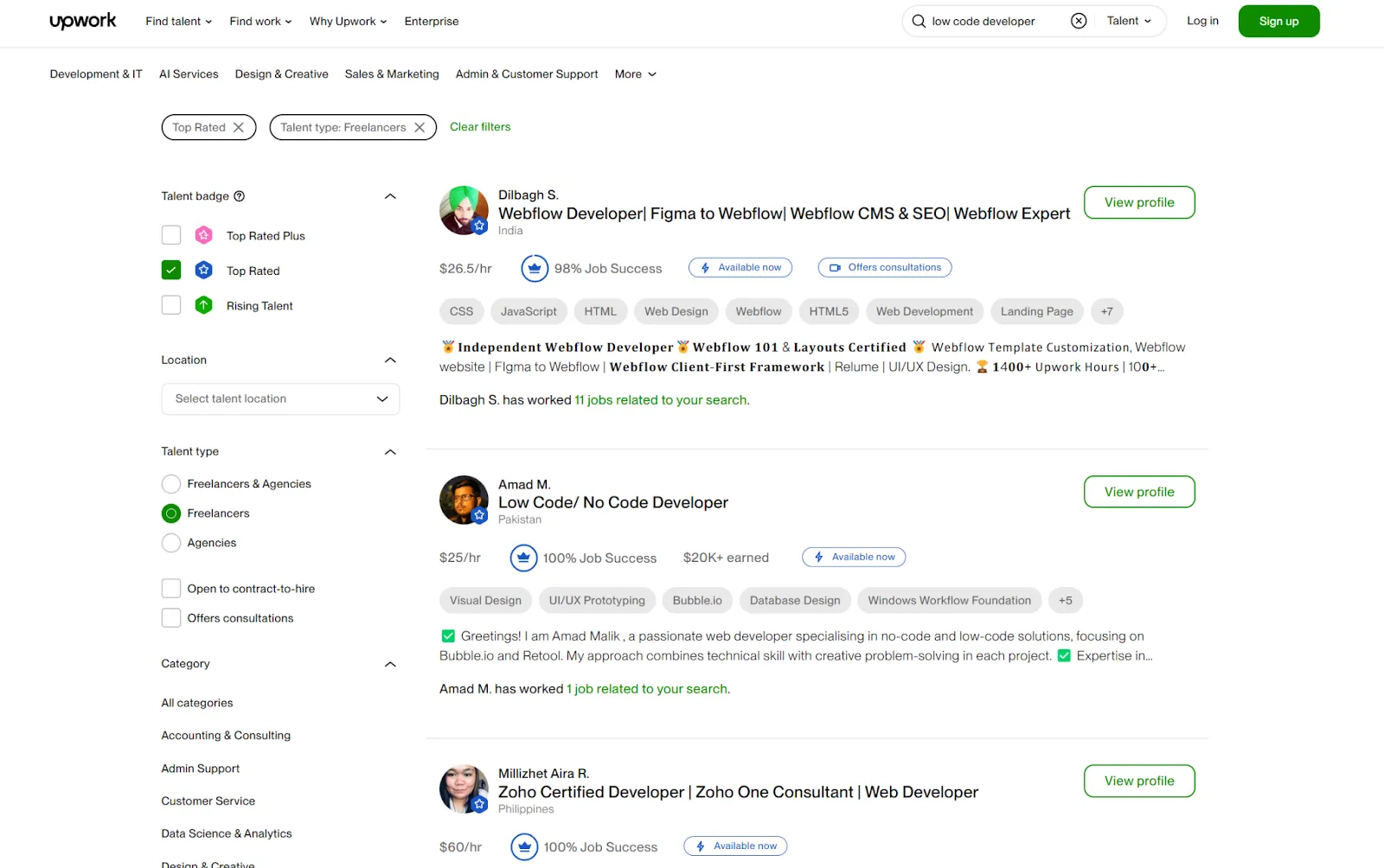
The rates of such specialists can greatly differ, which means that every business can find low code services that will correspond to their budget expectations. That's one of the strongest arguments that business owners and managers rely on in making up their minds.
However, this form of working with developers also has some disadvantages. Freelancers may work on several projects at the same time, which won't allow them to fully concentrate on your tasks. Moreover, if you want to hire the same person after some break, nobody can guarantee that this specialist will be available.
Benefits of working with a professional agency specialized in low code development services
Given the peculiarities of in-house hiring and the limitations of cooperation with freelancers, the option of working with a professional development company looks quite appealing.
As a rule, it is a more budget-friendly model than in-house employment. But at the same time, you may have more formality and guarantees than in the case of hiring freelancers.
What will you get thanks to cooperation with a professional agency?
- Deep low-code platform knowledge. Agencies that specialize in low-code technologies understand their strengths, limitations, and best practices. It means that they can use these tools in such a way that allows businesses to enjoy all the benefits of low code programming. For example, at Akveo, we work with Retool, Mendix, UI Bakery, and Budibase among other low-code platforms.
- Experienced professionals. Their teams often include certified low code developers, architects, and project managers who can optimize platform features to meet your specific needs.
- Streamlined development processes. Agencies leverage their experience to accelerate development timelines. They can successfully meet tight deadlines without compromising quality.
- Cost efficiency. Professional teams always know how to make the most of the low-code platform's features. This helps to reduce development costs. Moreover, the expertise of their low code developers helps avoid costly mistakes and rework.
- Improved collaboration. Companies that provide low code development services are skilled at aligning business requirements with technical execution. Their teams often include not only developers but also designers and strategists. It means that every aspect of your project is covered. If you need to get a consultation with experts, agencies usually offer such services as well.
- Ongoing maintenance and support. Professional teams can also provide post-launch services, including maintenance, updates, and troubleshooting to keep your app running smoothly. They can help to train your team on how to use and manage the application effectively in the long term.
Where to find a reliable tech partner for low-code application development?
The option to work with low code developers hired at a professional agency looks quite promising for many projects. Nevertheless, to enjoy all the mentioned benefits you need to find a responsible company with sufficient expertise that you can trust.
If you start googling for low code development services, you will get hundreds of search results. It can be rather challenging to analyze them all and conduct your own research. That's why you can turn to professional platforms like Clutch or GoodFirms. Apart from detailed information about each agency, you can also find their rankings and reviews written by their customers.
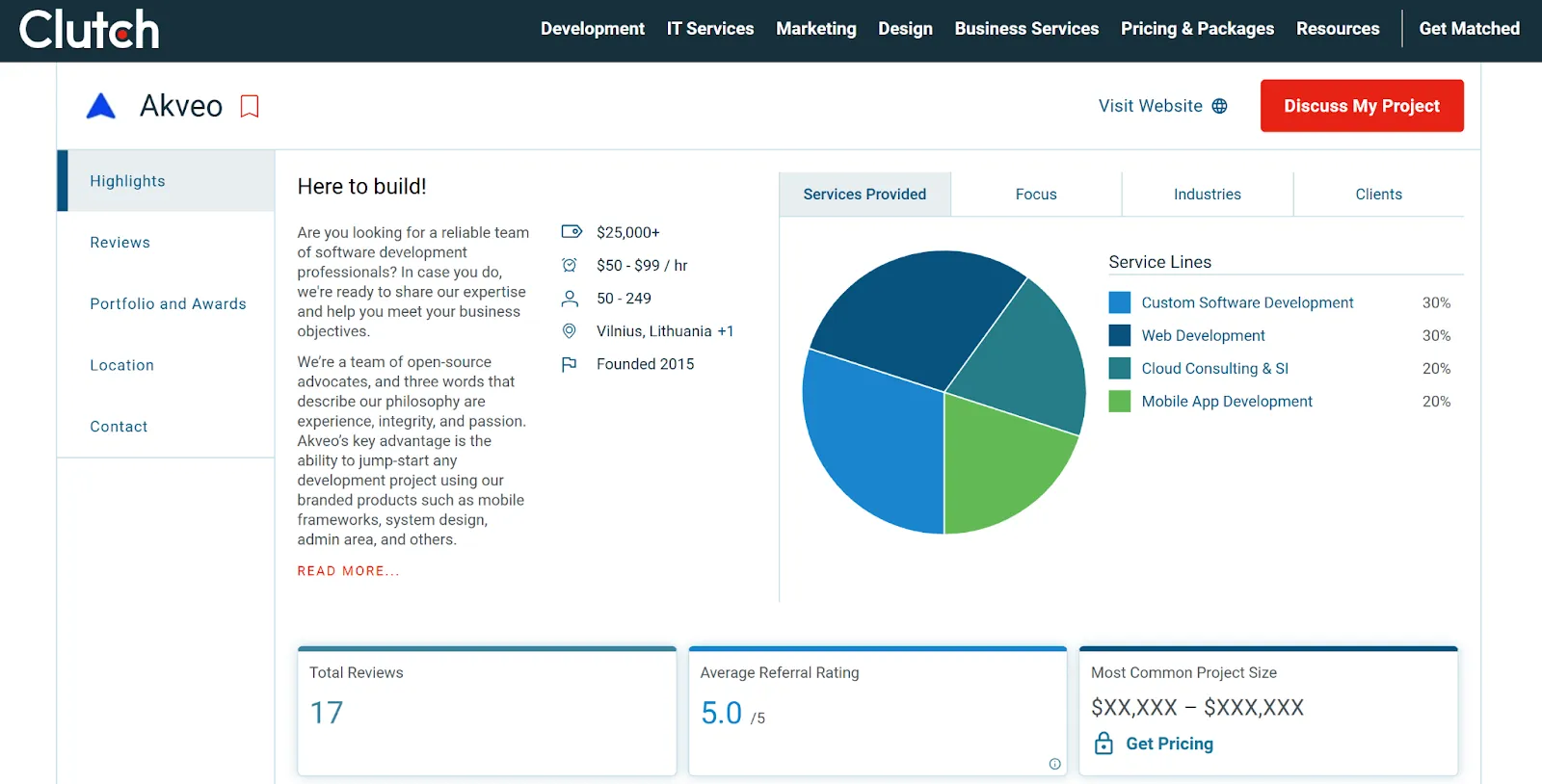
We recommend you attentively study the most suitable accounts and communicate with companies' representatives to get as much information about their services and expertise in low code programming as possible.
What to pay attention to?
- Experience of the team;
- The range of offered services;
- Technologies and low-code platforms the company specializes in;
- Engagement models and financial terms;
- The team's portfolio.
It will be really great if the team you are going to cooperate with has already worked on similar projects. This experience will help developers understand more easily how to approach your tasks and how to achieve the highest efficiency.
Bottom line
If you are currently looking for low code development services, start with an attentive analysis of your own needs. You should understand whether working with a professional agency will bring more value for you than hiring in-house developers, or vice versa.
Then you should define an exact set of low code services that you want to get. This will help you formulate a set of skills and expertise you should find.
After that, you can proceed to thorough market research. For it, you can use different professional platforms and study all the information available there.
At Akveo, we have rich experience in delivering low code services, including consulting, development, and maintenance, to companies from different industries. This has helped us to accumulate exclusive knowledge and skills that now our developers apply to offer the best solutions to our customers. Want to learn more? Do not hesitate to contact us!