

Managing an early-stage startup is already a challenge. But once it's accepted you have no way back (unless you are ready to fail). Your operational efficiency can make or break success. However, if you know what you're dealing with, all the tricky spots might become opportunities to grow.
There are different approaches to organizing internal processes. But in the era of digitalization, it is hardly possible to imagine seamless business procedures without automated workflows and powerful tools that will facilitate numerous tasks for your team members.
Where can you find all this?
One of the best solutions for startups can become the Retool platform. And in this article, we are going to explain how it can drive your startup's success. Moreover, we will share how you can start your journey with this platform absolutely for free. (Spoiler: This option is available only to eligible startups.)
What is Retool good for?
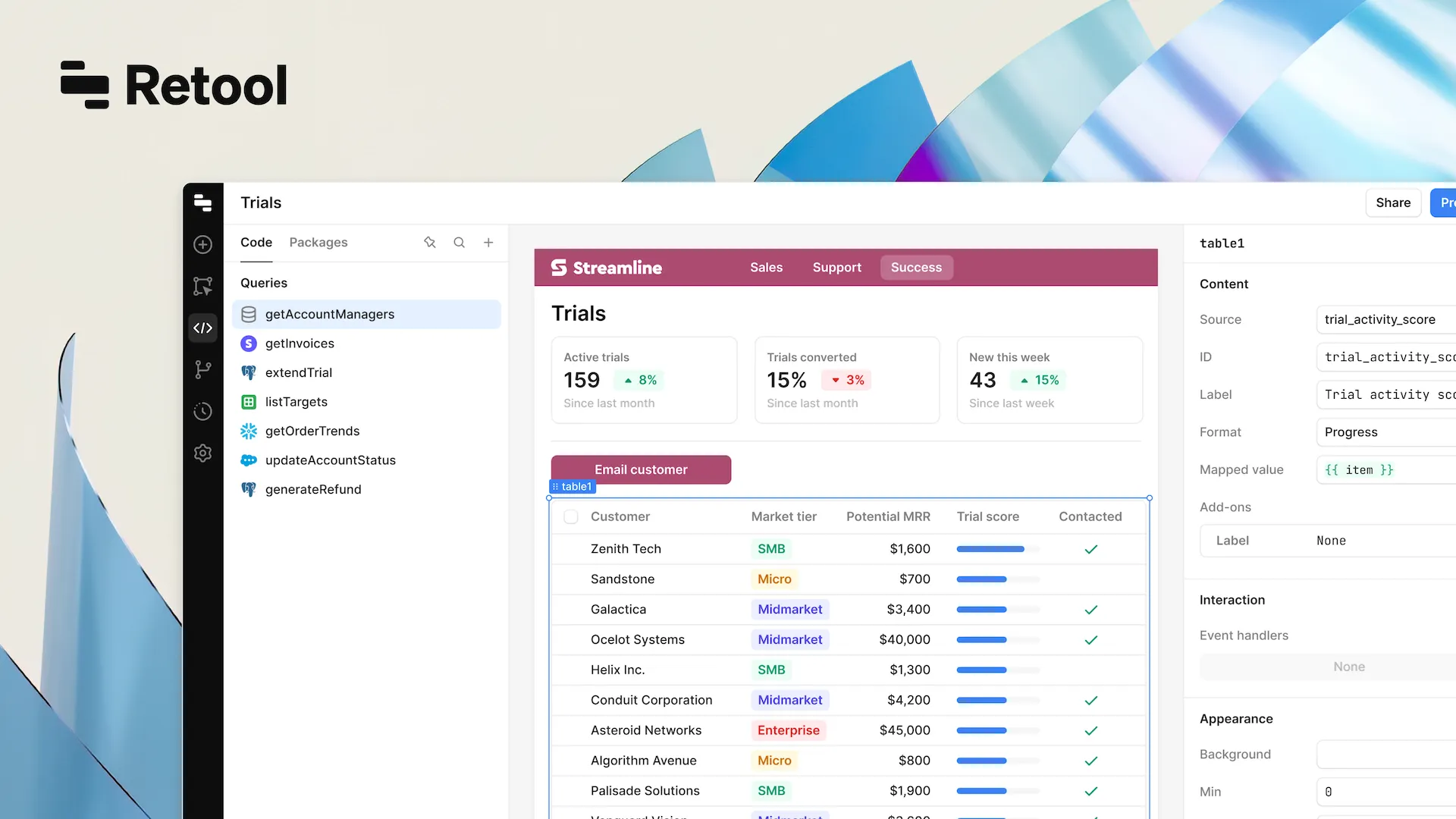
Retool is great for quickly building internal tools for different industries. But what makes it really valuable is that the development of custom internal tools doesn't require the necessity to code everything from scratch.
It allows developers and business users to create apps with a drag-and-drop UI and connect them to databases, APIs, and third-party services just in a few clicks.
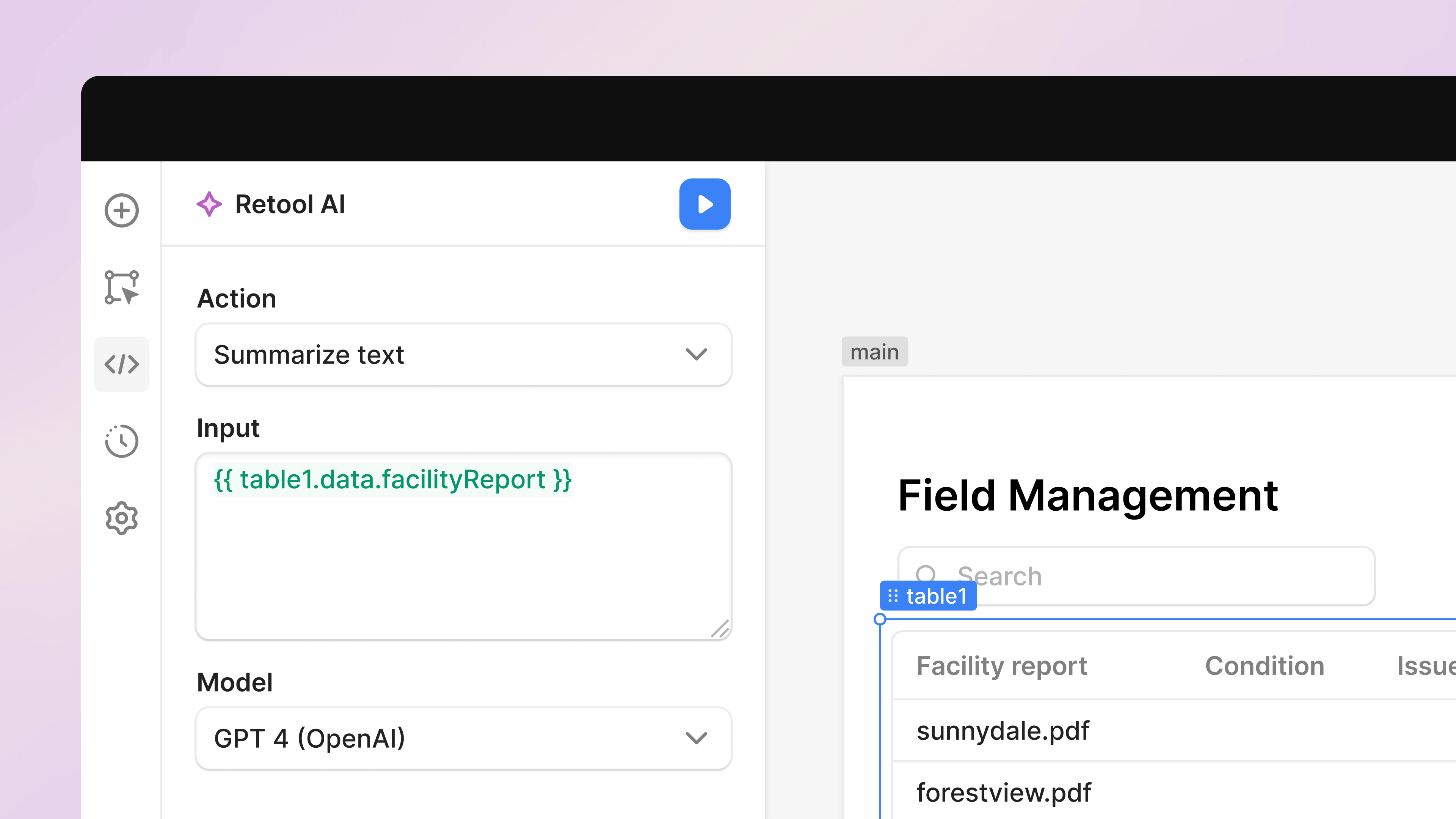
Additionally, if standard options, templates, and ready-to-use components do not meet your needs, it is still possible to introduce custom code and integrations.
This enables businesses to build highly unique internal tools and automated workflows that correspond to their specific processes.
Let's take a closer look at some of the use cases of Retool that startups can be interested in.
Custom workflow automation
There are a lot of industry-specific Retool's use cases. But some of them are suitable for businesses in any domain.
Automation of repetitive workflows is one of them. Companies can design internal tools that will streamline decision-making processes; tools that will increase the efficiency of data processing and manipulation, and many others.
Automated workflows built with Retool can be initiated by trigger actions (like form submission) or linked to a specific schedule.
Development of custom dashboards and admin panels
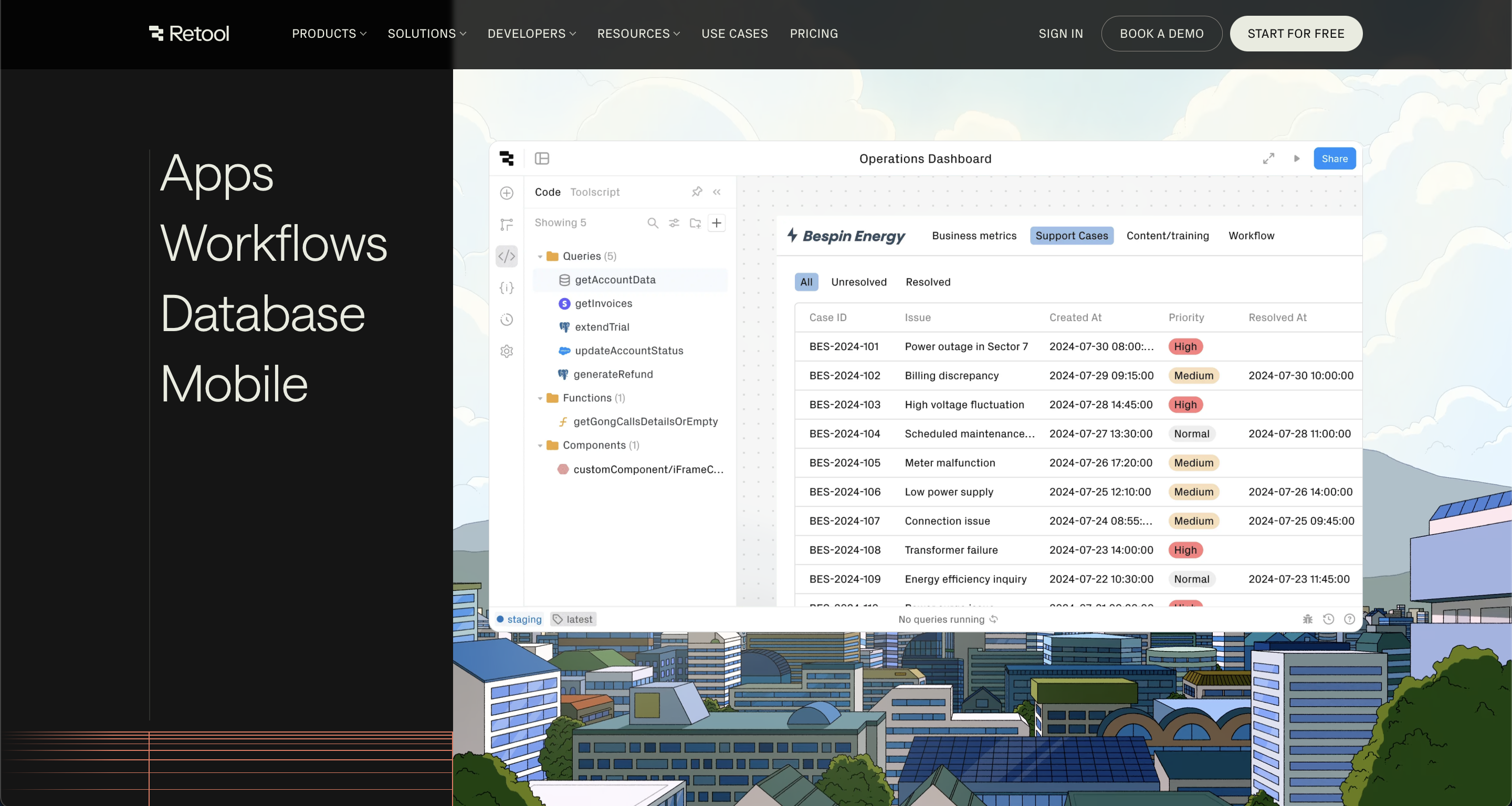
One of the most common applications of Retool is the development of dashboards that provide teams with real-time insights. It could be a customer support dashboard that allows representatives to manage accounts, a sales internal tool that will be used to track leads, or any other type of admin panel.
The key purpose of such custom internal tools is to help early-stage startups accumulate, view, and manipulate data with ease.
When building internal tools, companies can also integrate them with external data sources to get access to valuable insights.
Data management and administration
Handling large amounts of data manually can be highly challenging. With Retool, startups can create custom internal tools that will allow even non-technical users to manage records effortlessly.
This platform also works great for building content management systems (CMS). They enable marketing and product teams to update website content without turning to the assistance of professional Retool teams. Additionally, HR and IT specialists can also use Retool to build user management tools, streamline employee access permissions, and perform many other administrative tasks.
Even those businesses that work with highly sensitive data can choose Retool as the platform offers a wide range of security measures, including strong authorization features and audit logs.
Enhancement of financial and payment processes
Finance teams often rely on complex spreadsheets and outdated systems to manage payments, reimbursements, and audits. When you are building a startup, there is no need to bring such legacy solutions to it.
Retool simplifies finance-related tasks by providing billing and invoicing internal tools and dashboards that integrate with payment gateways. It can also automate expense approval workflows. Startups dealing with online transactions can leverage Retool to create fraud detection tools that will detect suspicious activities and mitigate risks.
Improvement of customer service
A lot of startups choose Retool to build internal tools intended for delivering a smooth customer service experience. With this platform, teams can create desk tools that centralize customer interactions, track support tickets, and automate responses.
Of course, that's not a list of cases where Retool can be of great help. To get a better understanding of what other tasks you can perform with this low-code development platform, you visit Retool's official website and study the range of use cases provided there.

What typical problems of early-stage startups can you address with Retool?
The range of Retool customers includes businesses of all types and sizes. This platform provides valuable features for building custom internal tools tailored to the needs of early-stage startups, growing companies, and enterprises.
Let's analyze what Retool can offer to those entities that are just creating their internal processes and need powerful tools for this task.
From limited resources to scalability concerns, startups face a myriad of hurdles that can affect their growth and success. In this section, we are going through seven of the most crucial problems that are commonly encountered by startup owners and that can be solved with good internal tools.
Problem 1: Resource constraints
Startups often start with a small team and limited resources for building internal tools and performing other tasks. Each member wears multiple hats and manages a wide range of responsibilities.
Money is prioritized for essential aspects and product development, leaving less room for improving operational systems. It for sure brings a versatile and agile working environment, but also impedes growth and scalability.
This leads to:
- Increased workload that affects productivity and turnover rates.
- Skill gaps, resulting in inefficiencies and mistakes.
- Stunted growth with no possibility to manage critical tasks on time.
- Delayed investments that will end up in purchasing the wrong software.
- Compromise on quality, meaning less expensive, lower-quality tools, that will not, most likely, meet all the needs.
Problem 2: Scalability issues
Scalability is all about how successfully a business can grow and adapt. With a lack of resources, startups can't manage a lot. But the customer base will probably grow over time. And the existing operational infrastructure may struggle to cope with the demand.
What challenges are on the way?
- With the increase in data volume, the initial systems might not be capable of processing and storing itefficiently.
- Increased demand can lead to longer response times and decreased quality of service, affecting client satisfaction.
- With growth, tool upgrades can be costly and disruptive.
- Implementing new systems often needs advanced technical capabilities, which may be beyond the expertise of a startup team.
Problem 3: Integration challenges
As startups grow, they typically accumulate large volumes of data from various sources. And it is a pretty common practice to collect and sort it using different tools and software platforms.
But managing the data effectively is essential for operational success. Companies can't handle it without smooth integration.
What are the things to be concerned about?
- Data isolation that will make it difficult to get a unified view of business operations or customer interactions.
- Inefficiencies and errors that could happen due to manual data entry.
- Increased operational costs, because of the usage of multiple software.
- Overwhelming data volumes and, as a result, missing out on valuable insights.

Problem 4: Process inefficiencies
There is always a point, when operational processes don't work as well as they are supposed to. But even slight inefficiency hinders productivity and scalability and furthermore affects the whole future of the company.
What difficulties should you be ready for?
- As transaction volumes increase, the likelihood of mistakes and their potential impact also grows.
- Manual processes require significant human input and time – this can slow down operations and reduce overall efficiency.
- It's typically hard to scale up with non-automated processes. As a result, the company might be stuck with no growth without powerful internal tools.
- Automating processes becomes more complex if there is no standard approach to begin with.
- If there's no standardization, the output quality will struggle as well.
Problem 5: Compliance and security
Compliance and security are paramount concerns for startups, especially those operating in industries like healthcare, finance, and education. Failure can lead to legal issues, significant financial penalties, and damage to a company's reputation.
What are the most common challenges?
- Complexity of legal requirements and security measures.
- Frequent changes: keeping up with all the changes and implementing them can be resource-intensive.
- High costs: compliance and security often require significant investment in systems and training.
Problem 6: Technology challenges
Selecting the right technology and internal tools is also important for achieving operational efficiency. The choices made can significantly impact the startup's ability to grow, adapt to new demands, and manage costs.
Companies should be ready for:
- Mismatched solutions, leading to inefficiencies, as well as not desired ROI.
- Integration complexity that might need additional investments.
- Cost-unfriendly solutions.
Problem 7: Customer experience management
Maintaining a consistent level of service can be challenging. The same – with offering solutions that are tailored to customers' individual needs and preferences. But achieving these goals is essential for customer satisfaction.
That's why startups should focus on handling:
- Interaction quality that helps to ensure all members provide the same level of service.
- System overload to overcome slow response times and low customer satisfaction.
- Delivery on expectations that might be challenging, but also is important for growth.
- Privacy concerns, as misuse of customer data can lead to trust issues and legal consequences.
There is no “magic bandage” that will help with all the challenges from above. But thankfully there are some solutions that can take care of the majority of issues described. One of them is Retool. Let's find out how it could ease your life and help to scale and grow.
Why do many early-stage startups choose Retool?
The popularity of Retool among startups is growing. And there is a range of weighty reasons for this.
Reason 1: Cost-effectiveness and support for startups
Retool is not just cost-effective in case of replacing expensive custom software. It also offers pricing tiers to fit various startup sizes and needs.
The company supports new businesses through its Retool for Startups program, which provides special pricing, Retool credits, extended trials, and additional learning resources to help you grow and scale.
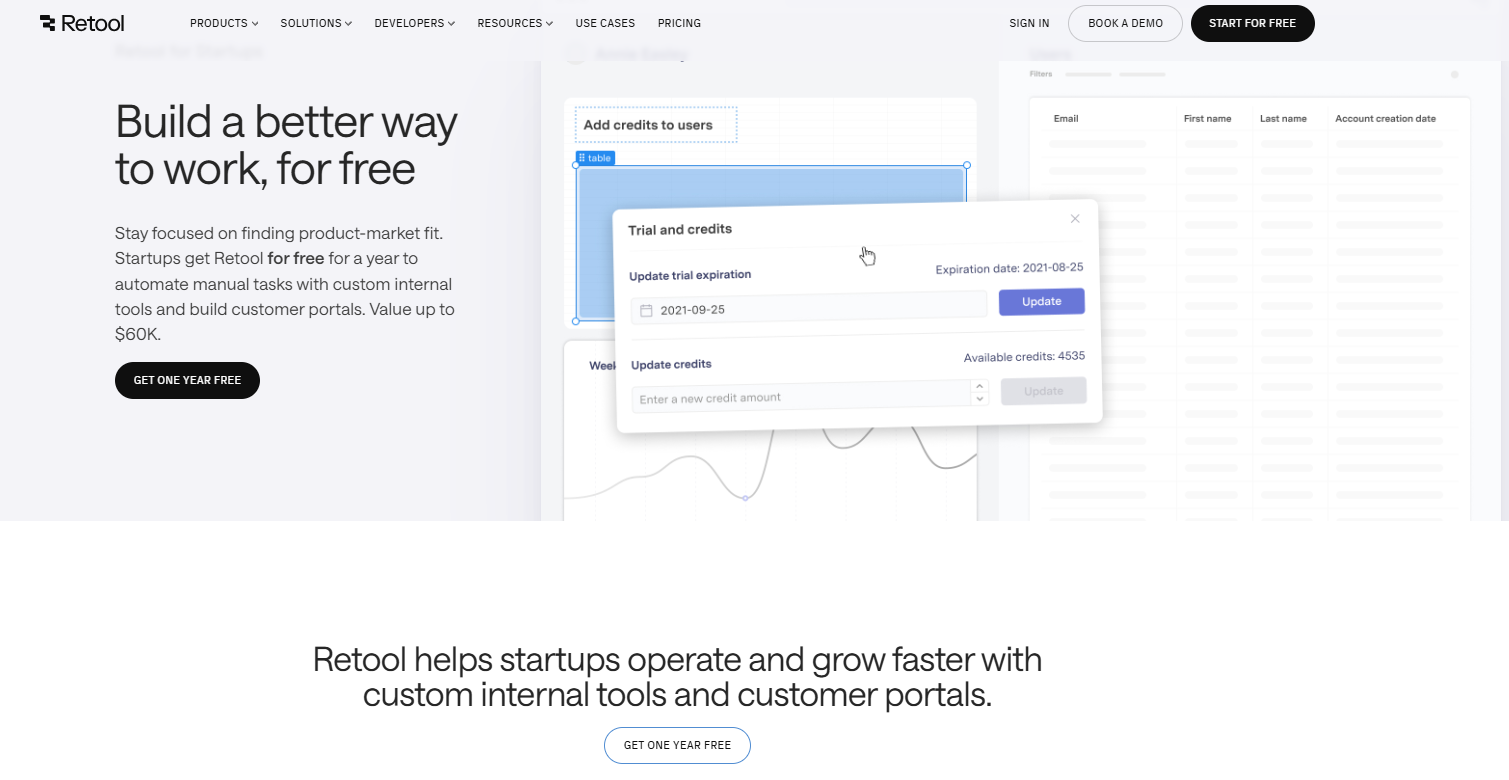
We will consider this offer in more detail further in our article.
Challenges solved: ☑ Resource constraints, ☑ Technology challenges.
Reason 2: Scalable infrastructure
Designed to grow with your business, Retool can handle increasing user numbers and data complexity without sacrificing performance. Its adaptability ensures that startups can expand operations without changing their internal tools.
Challenges solved: ☑ Scalability issues.
Here's a real example for you – Finn, a Norwegian tech company that offers car subscriptions. Their team understood that they urgently needed to streamline operations, automate manual tasks, and consolidate customer data.
Implementing new internal tools with Retool led to a 30% increase in efficiency, a 50% reduction in manual workload, and a 40% improvement in scalability.
Reason 3: Seamless integration capabilities
With built-in support for numerous databases, APIs, and third-party services, Retool easily facilitates integration, reducing the complexities and costs. While more complex tasks can be performed solely by specialists with relevant experience, some simple integrations are available even to non-tech users. Moreover, the platform provides relevant learning resources.
Challenges solved: ☑ Integration challenges, ☑ Technology challenges.
That was the case at ThePowerMBA business school. It leveraged Retool to optimize backend operations, automate course management, and enhance content delivery on their educational platform.
What results did Retool bring? A 25% increase in course delivery efficiency, a 40% rise in student engagement, and a 30% improvement in scalability. And still continue to grow.
Reason 4: Custom application building
Retool allows startups to build internal tools and apps tailored to their specific needs. They can cover multitasks, like enforcing standardized processes, ensuring compliance with regulations, maintaining high quality and consistency, and others.
Challenges solved: ☑ Process inefficiencies, ☑ Compliance and security.
Oddbox, a social impact business fighting food waste in UK's farms, decided to build an internal platform with Retool. And the decision was a success.
With the help of the technology, the company improved inventory visibility by 25%, reduction in waste – by 30%, and by 20% increased sustainability in their food delivery service.
Reason 5: Continuous feature updates
Retool is committed to innovation, regularly improving the platform with the new features. This ensures that startups have access to the latest tools that support efficient operations without the need for additional tech investments.
Challenges solved: ☑ Technology challenges.
A real case: U.S.-based financial tech company Ramp decided to test Retool's ability to enhance reporting and tracking processes.
The goal was achieved with a 20% reduction in reporting cycle time, a 30% decrease in manual errors, and a 25% cost savings.
Reason 6: Customer experience tools
Through Retool, companies can create personalized interfaces that will probably enhance customer interaction and satisfaction. This is a crucial competitive advantage for building loyalty.
Challenges solved: ☑ Customer experience management.
Doorstead, a property management platform from San Francisco, actually proved it with a real-life experience.
The company implemented Retool for building their internal operations and reached a 50% reduction in turnaround time for tenant vetting, a 40% increase in maintenance request processing efficiency, and a 20% rise in customer satisfaction.
{{cta="/service-blocks"}}
Special program for startups: How to use it
As we have already mentioned, startups have the possibility to leverage a great discount. They can get access to Retool for one year for free. This special program presupposes that eligible startups will receive $60K in Retool credits for building their internal tools and automating workflows.
To get a chance to use free credits, startups should meet particular requirements:
- They should be founded within the last 10 years.
- They should be bootstrapped, angel-funded, debt-funded, pre-seed, seed, or Series A startups.
- Their raised funds should be less than $10 million in total.
Retool credits won't be available to existing customers on the monthly Team or Business plans. Startup credits can't be used together with any other discounts provided by the platform.
It's also worth mentioning that this special offer also includes $200,000 in perks from the platform's partners like AWS, DigitalOcean, MongoDB, and others.
Retool credits expire after one year. But the startups that participated in this special program will get a 25% discount on their paid plans for the next year.
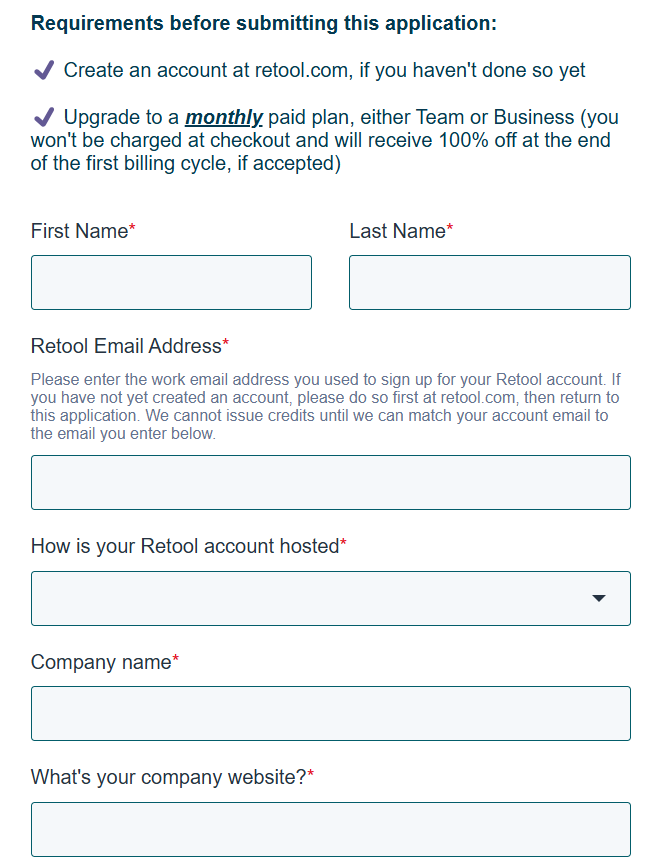
To participate in a discount program, new Retool users have to submit a form and provide the required details about their business activities.
Conclusion
Retool offers learning resources and a load of solutions for building internal tools, automating workflows, and overcoming operational challenges. It provides early-stage startups with the tools and support needed to drive efficiency and scalability – exactly what companies are seeking when they are just starting their business journeys.
In Akveo, we have years of experience developing custom low-code solutions for startups, middle companies, and enterprises. Our Retool team created PoCs, admin dashboards, internal portals and other platforms to help our clients streamline their operations and scale business in a short period of time.
Check out our portfolio or contact us to get a free consultation on the project you want to launch with Retool.