


Every business strives for process optimization which can be achieved with the help of well-designed workflows and digital tools. One of the most promising emerging technologies that can fully revolutionize the way companies organize their processes today is artificial intelligence.
It can help to streamline and automate a lot of routine tasks that traditionally require a lot of time and effort. AI applications have dozens of benefits. But the complexity and cost of their development and implementation can become a serious barrier for many companies. And here is when a reliable low code application development platform can enter the game.
In our article, we would like to focus on low-code AI platforms. Low code integration can greatly facilitate your entry into the AI space and make this transition as smooth as possible. But before we dive deeper into the peculiarities of this approach to development and examples of tools, let's start with the basics.
Low-code platforms help to eliminate the necessity of writing thousands of code manually. When you apply such tools, you do not need to hire a big team of professional developers with specific knowledge. If you want to learn more about the differences between this concept and traditional software development, we recommend you read one of our previously published articles.
What is low-code for AI?
As for low-code AI, this term can be used to describe tools and platforms that are designed to help users build AI apps without writing the entire code manually.
In other words, such tools can open doors to the world of AI solutions and business automation for everyone.
The number of low-code development platforms is growing along with the demand for them. However, it doesn't mean that they all are absolutely identical or that they open the same possibilities for businesses that opt for them. The idea is that each low code tool has some particular features or capabilities that can address the needs of different groups of users.
Low-code AI tools for your project
In this context, it is important to know how to find the best low code application development platform for your business and what to pay attention to in the first turn. For example, some tools do not require any tech skills at all. At the same time, others presuppose that users have at least a basic understanding of coding principles and AI/ML functioning.
Microsoft Power Apps
Microsoft offers a wide range of low-code development tools for businesses. And one of the products that it provides is Power Apps. It helps users even with practically zero coding skills deliver apps enriched with AI to transform their legacy processes. The created applications can bring value to a wide range of domains, including finance, sales, marketing, customer support, and human resources.
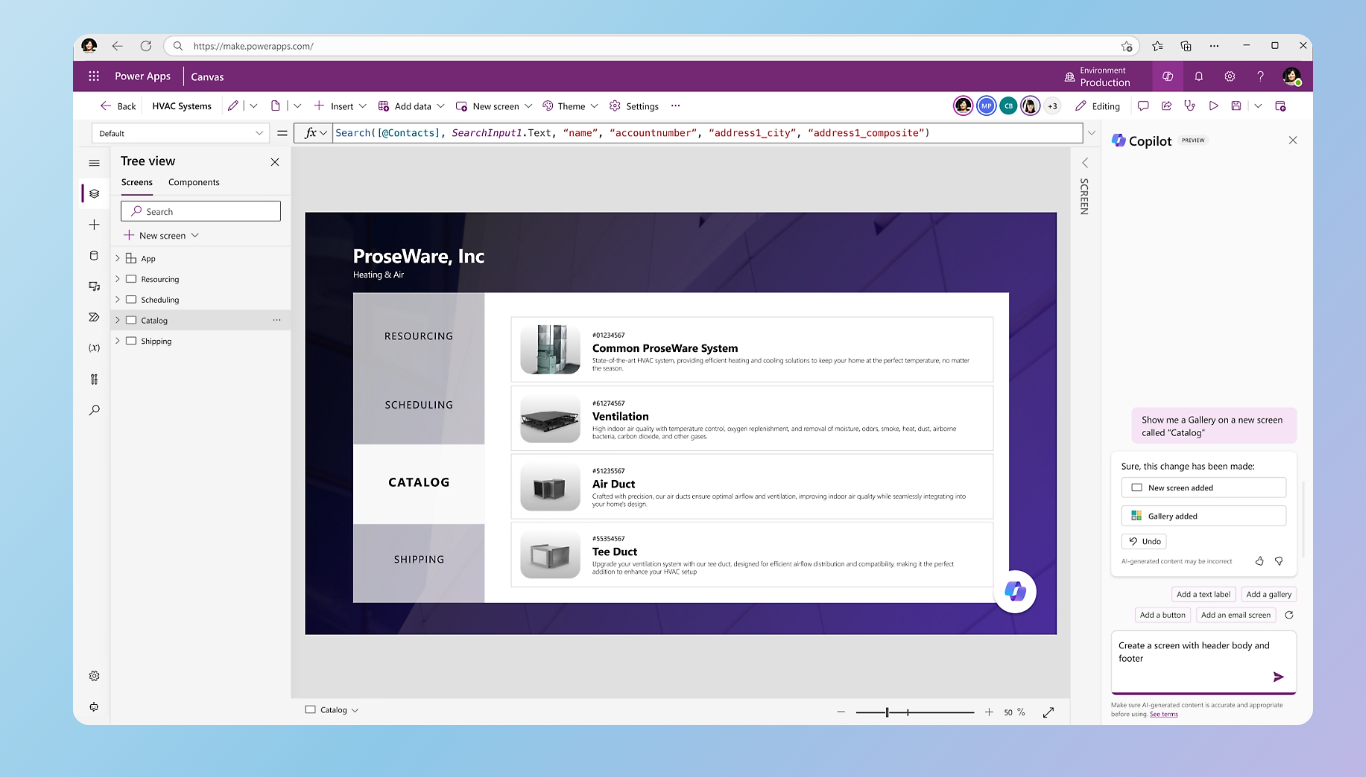
Key features of Microsoft Power Apps
What functionality can businesses leverage with this low code AI platform?
Pre-defined AI tools with customization
The Power Apps tool offers access to pre-defined AI capabilities. With AI Builder, they can be easily customized and tailored to the specific requirements of users.
Copilot integration
This AI low code platform also lets businesses leverage the advantages of Microsoft's Copilot. Its capabilities can be applied to generate text inputs, streamline the processes of filling in forms by users, and facilitate other common tasks.
Seamless Microsoft ecosystem integration
Power Apps can become an excellent option for those businesses that heavily rely on the Microsoft ecosystem in their work. It can ensure seamless integration with all Microsoft products.
However, the same factor can become a pitfall for some organizations. To fully enjoy all the benefits of Power Apps, the use of the Microsoft ecosystem is a must.
OutSystems
It is a widely used AI-powered low-code platform that is suitable even for building complex business-critical solutions. With the offered tools, companies can create both internal apps and external applications, as well as highly reliable core systems that can be easily customized.
OutSystems boasts high popularity across various industries, including but not limited to:
- Banking;
- Agriculture;
- Healthcare;
- Government, and many others.
The team behind OutSystems is actively exploring the AI space. Now businesses can enjoy seamless integration of state-of-the-art AI models in their apps.
What functionality can be added to your app?
- Content generation;
- Summarization;
- Semantic search;
- Process automation, etc.
Curious to learn more about this low-code AI platform? Dive into our detailed analysis.
Appian
Appian is positioned as a low code platform for process orchestration, automation, and business intelligence. Apart from traditional features for building custom apps with minimal coding, Appian can offer its users enterprise-ready AI architecture.
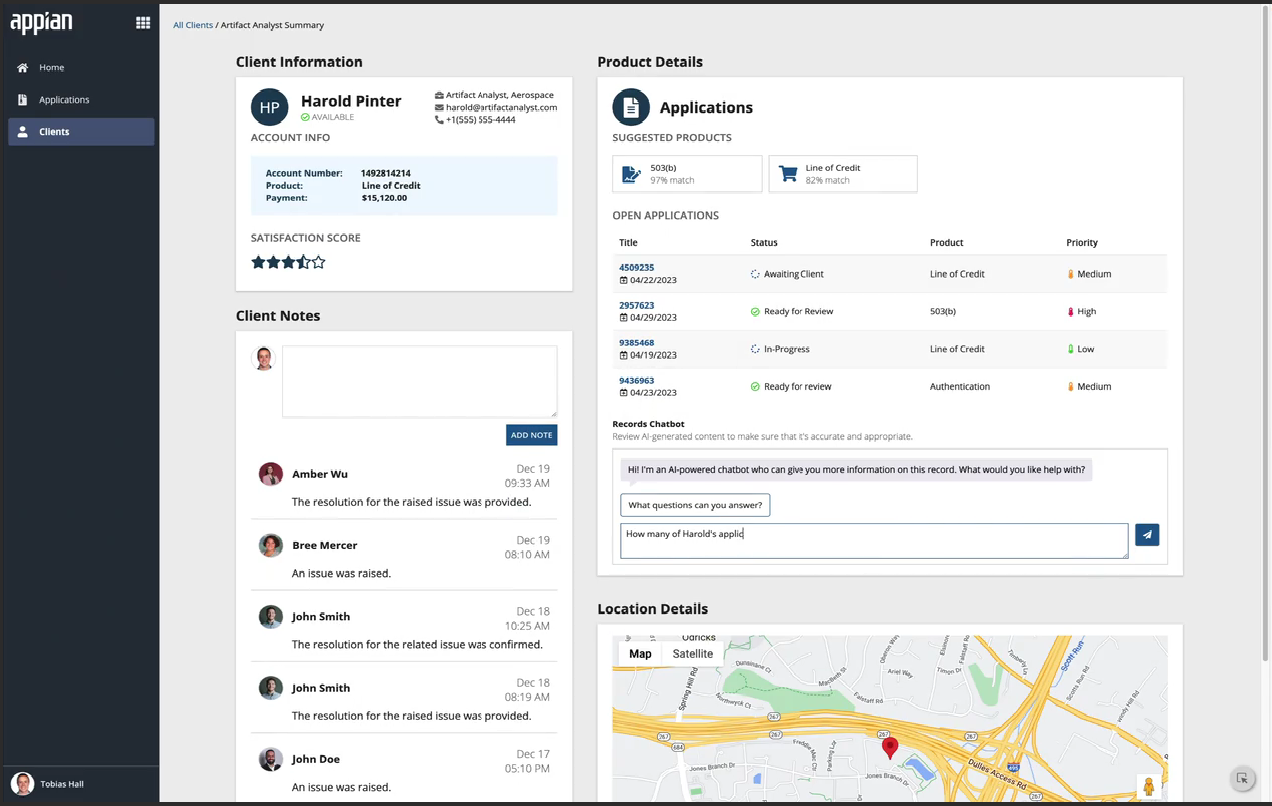
To better understand whether Appian is a good option for low code AI projects, it's necessary to have a look at its key features.
Generative AI and AI copilots
It provides businesses with the possibility to enhance their processes with Generative AI tools and AI copilots.
Customizable AI Models
Businesses can revolutionize their existing workflows by implementing available GenAI prompts or creating their own AI models.
End-to-end automation
To increase teams' productivity and minimize errors, Appian offers companies the opportunity to leverage the benefits of its end-to-end automation platform.
Being widely used by enterprises, this low code tool may turn out to be rather expensive for small companies. Moreover, as well as in the case of many other similar solutions, when it comes to more complex workflows, the expertise of non-tech users may not be enough.
For more details, we recommend you study this information provided on our blog.
Retool
Retool is one more platform that will let you build AI-powered applications, even if you are not an expert in artificial intelligence. As an app development tool, Retool can help businesses consolidate their data to make it possible for any large language model (LLM) to use it.
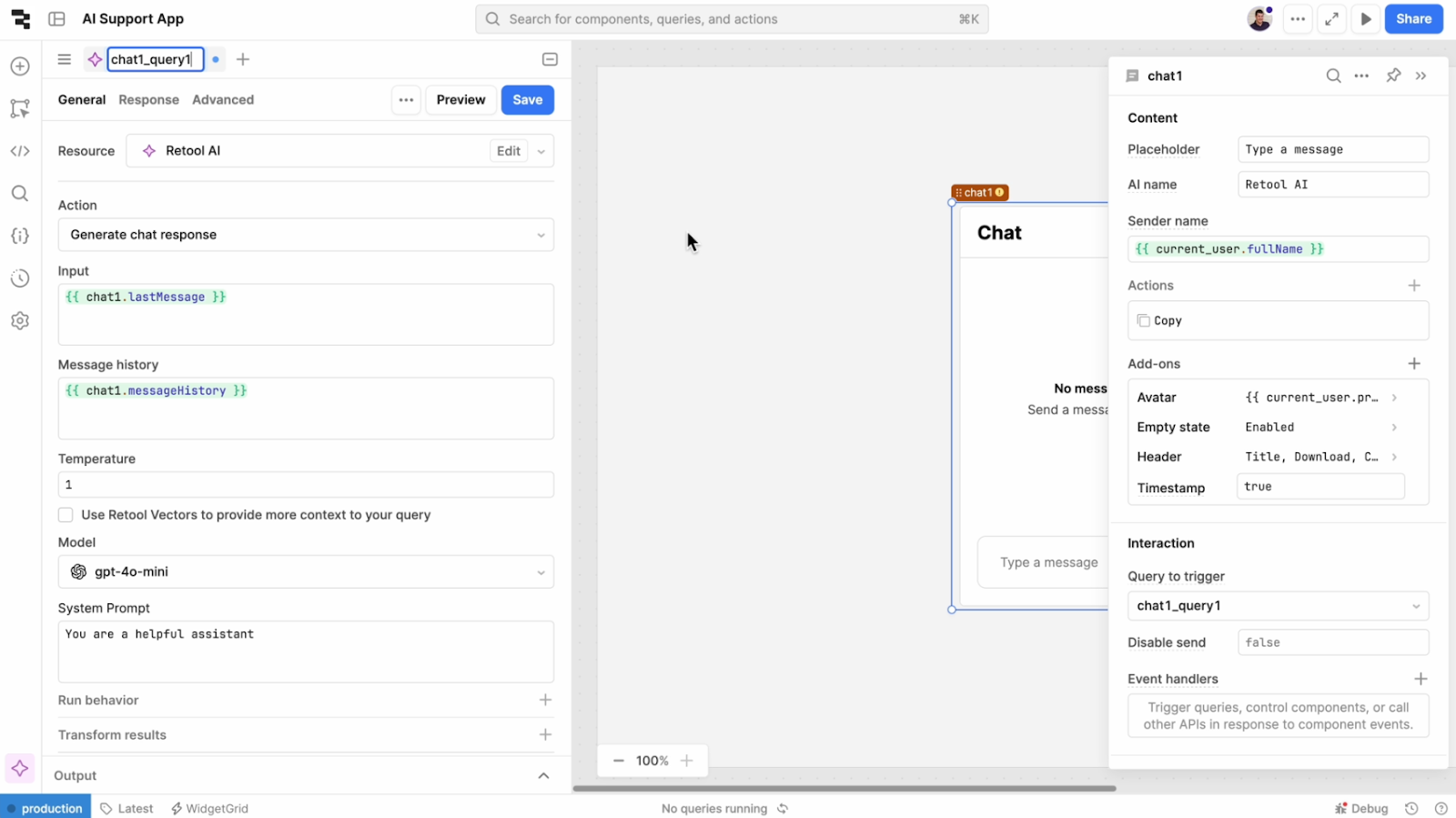
What does Retool provide for low code development?
Here are a couple of features developers can use to build AI-powered applications with Retool.
Ready-to-use actions
The platform provides access to numerous ready-to-use actions powered by OpenAI, Azure, and other prominent technologies. But if users can't find the required AI capabilities on the list of available, they can add their own models and API keys.
Automation
When it comes to automation, Retool also has what to offer. Businesses can rely on the advantages of Retool Workflows to manage multiple actions to ensure end-to-end automation.
Business-specific bots
This tool can also be highly helpful for building business-specific bots. Such bots demonstrate outstanding efficiency in the particular use cases for which they are trained.
You can read more about other Retool's features and capabilities here.
Mendix
Unlike the previously mentioned one, this low code tool is known for its outstanding scalability. That's why quite often it is used by enterprises with complex workflows.
Key features of Mendix
Visual development environment
Mendix allows companies to create AI applications in the visual development environment with pre-built AI components.
Efficient collaboration
The platform drives efficient teamwork and collaboration across departments, which enhances app delivery. This is highly valuable for delivering apps that will precisely address all the ongoing specific business needs.
Cloud-native deployments
Mendix supports cloud-native deployments for flexibility and scalability.
AI integration
The platform allows smooth integration with popular third-party AI tools.
Embedded Machine Learning (ML) models
Mendix includes integrated ML models. This provides advanced AI capabilities within the platform.
As well as any other tool, Mendix has some limitations. For example, users need to have some technical expertise to build more complex AI apps.
Want to get more detailed info? Read our Mendix review.
Zoho Creator
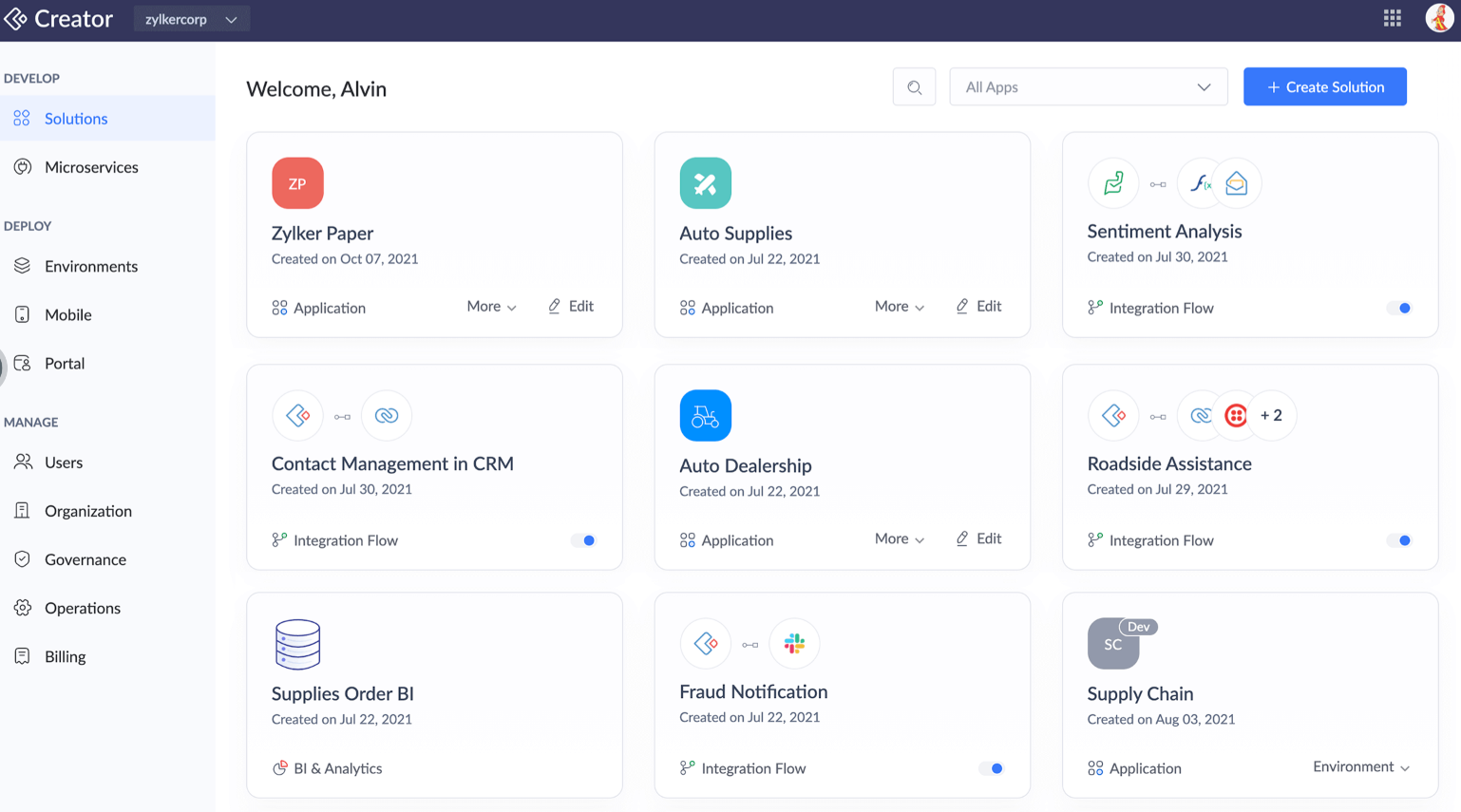
This tool is often used for building AI-powered apps. It allows businesses to create solutions with unique workflows and process automation functionality without applying serious coding skills. Zoho Creator is designed to be intuitive, even for users with minimal experience with similar platforms.
Key functionality
- Drag-and-drop interface;
- Ready-made templates;
- Workflow automation;
- AI-driven insights and analytics;
- Simple integration with Zoho Apps.
This low code app development platform can be a good choice for medium-sized and small companies. Nevertheless, for enterprises, its scalability capacities may not be sufficient.
To get a better understanding of the capacities of this platform, you can follow the link and read a detailed review.
How to choose the best platform for low-code development?
Let us briefly mention the key factors that you need to evaluate to select the optimal low-code tool for app creation.
Alignment with your goals
Clearly outline what you want to achieve with this low-code solution. Do you want to automate your manual tasks or do you need to build an app with complex AI analytics? Verify whether the platforms under consideration offer the necessary features.
User-friendliness
Look for tools with intuitive interfaces and minimal learning curves. This is especially important if your team lacks extensive technical expertise.
{{cta="/service-blocks"}}
Integration capabilities
Make sure that the chosen tool can seamlessly integrate with your existing systems and workflows.
Scalability
This characteristic is essential to handle increasing data volumes and more complex AI business applications over time.
Customer support and community resources
These two aspects can be invaluable for troubleshooting and learning. Platforms with comprehensive documentation and responsive support teams can significantly enhance your experience.
Cost-effectiveness
You should compare the pricing models of different tools to find the one that offers the best value for your budget. This point requires diligent research from your side. Many platforms today provide pricing only upon request, especially for enterprise-level offers.
Low code integration: The best tactics
The choice of the right low code AI platform for app creation is very important. However, it is also crucial to be sure that your company is well-prepared to adopt your low-code AI apps. Only this will guarantee the highest efficiency of your efforts.
At Akveo, we have solid expertise in helping businesses at different stages of AI implementation. And here are a couple of practical recommendations that will facilitate this process for you.
Define suitable use cases
Introducing AI just because it is a modern trend is not the best approach. A very good understanding of the reasons for doing it and the desired outcomes is always required. That's why first of all, you need to determine areas where low-code AI apps can add the most value.
Upskill employees
It is always necessary to invest in training programs before introducing new tools that your team members will need to deal with in their work. You have to equip your staff with skills in working with low-code development tools and new AI-powered business applications.
Foster collaboration
One of the essential tasks for you will be to encourage collaboration between IT and business units for your low-code projects. In direct interaction between all teams, it will be easier to determine when and how low-code AI platforms can bring the highest value, making sure new solutions align with organizational goals.
Integrate AI into existing workflows
In our practice, we had a lot of cases when our clients had plans to implement AI without changing their existing processes. Nevertheless, in many situations, this approach doesn't seem feasible. It could be much more sensible to start with existing workflows. You can utilize low-code solutions to enhance current business processes without overhauling existing systems.
Ensure data security and compliance
You should implement robust data governance practices to maintain low code security and compliance when deploying AI solutions. As a rule, such solutions will deal with highly sensitive business data. That's why you should carefully analyze how your low code application development platform works with data.
Wrapping up
By adopting reliable low code AI platforms and tactics, businesses can leverage the entire power of this approach. It will help you drive innovation, improve operational efficiency, and maintain a competitive edge with your custom apps in the evolving tech landscape.
Low-code platforms greatly simplify the development process. However, the help of professionals with relevant expertise can be quite valuable, especially at the initial stages of project planning and realization. If you are interested in consulting or development services, do not hesitate to contact us. Our professional developers deeply understand the peculiarities of low code and AI integration and know how to enable you to fully feel its benefits. Let's drive your business growth with low-code AI development together!